
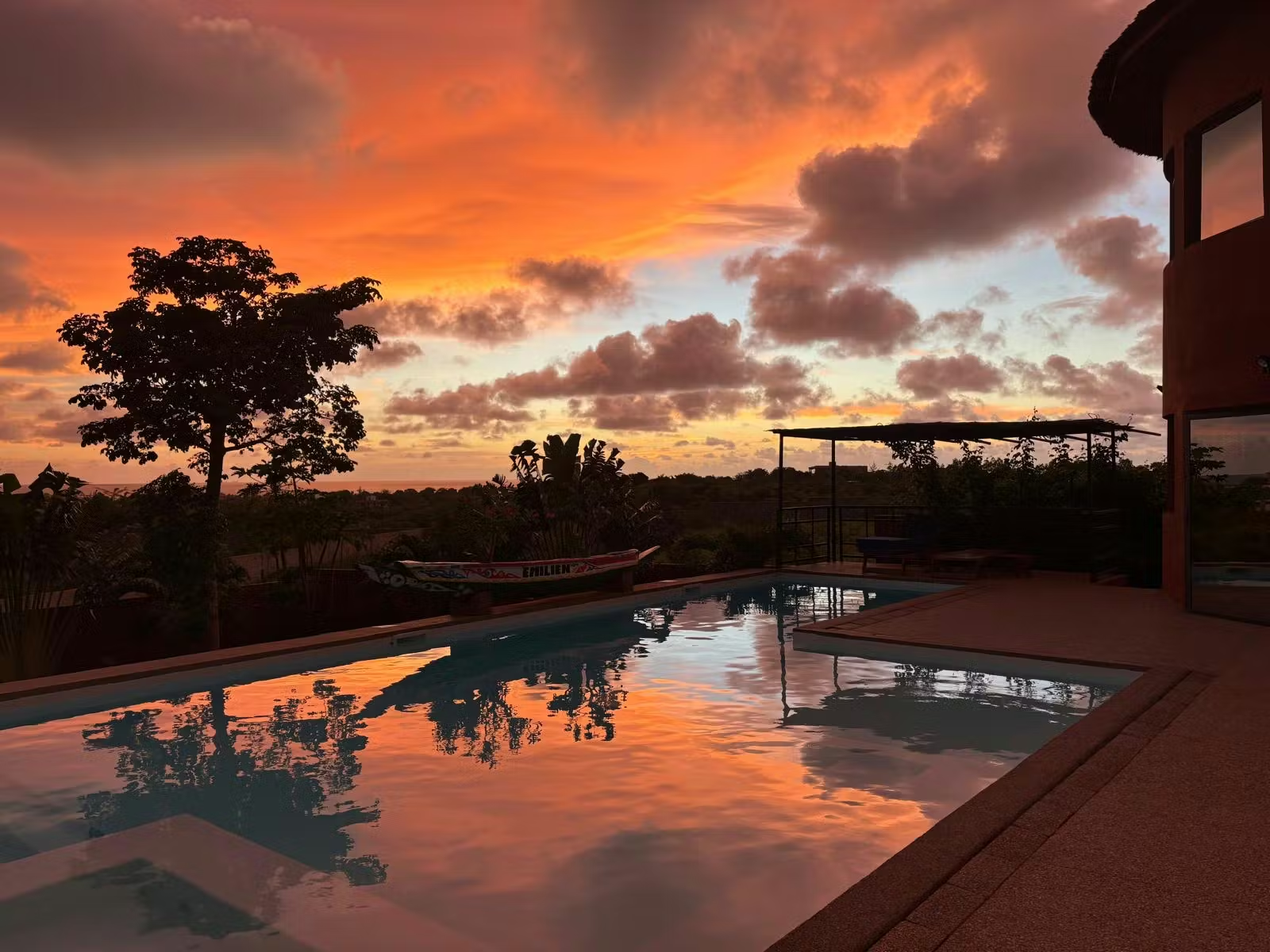
I don’t know when it happened exactly, but luxury stopped meaning what it used to.
Somewhere along the way, the idea that luxury was about more — more space, more staff, more formality, more everything — started to feel a little hollow. I’ve stayed in places that checked every traditional box and still felt oddly forgettable. And then I’ve stayed in others — quieter, simpler, less showy — that stayed with me long after I left.
That’s the shift I keep seeing. Luxury hasn’t disappeared. It’s just changed its posture.
These days, the most luxurious thing you can have while traveling isn’t excess. It’s ease. It’s arriving somewhere and not feeling rushed, not feeling watched, not feeling like you’re participating in someone else’s idea of what a “high-end experience” should look like. Real luxury feels almost invisible when it’s done right.
Privacy has become currency. So has silence. So has the ability to move at your own pace without being ushered along by schedules, itineraries, or expectations. The places that get this understand that service doesn’t have to announce itself. It just has to work.
I’ve noticed that people who travel well now care less about being impressed and more about being comfortable — and I don’t mean comfortable in a predictable way. I mean comfortable enough to exhale. Comfortable enough to sit with a coffee and not feel like you’re missing something else you’re supposed to be doing. Comfortable enough to stay put.
Time has quietly replaced money as the real marker of luxury. Time to linger. Time to return to the same spot twice. Time to do nothing without guilt. That’s not something you can buy outright, but you can design for it — and the smartest hotels, villas, and experiences are doing exactly that.
What’s interesting is how restrained luxury feels now. Design has gotten calmer. Palettes are softer. Spaces feel intentional rather than opulent. You see fewer logos, fewer flourishes meant to signal status. Instead, there’s an emphasis on proportion, light, materials, and flow. It’s confidence without volume.
And this isn’t just about where you stay. It’s how you move. Early flights to avoid crowds. Off-season trips where places feel like themselves again. Choosing one neighborhood over five. Turning down the idea that a trip has to be productive to be valuable.
I think a lot of this comes from fatigue. Not just travel fatigue, but life fatigue. People are done performing. They don’t want to document every moment or prove that they had a “good” trip. They want the kind of experience that doesn’t need justification.
Here’s what I think about this, honestly: the most luxurious trips right now are the ones that don’t try to convince you of anything. They trust you to recognize quality when you feel it. They give you room instead of spectacle.
And once you experience travel like that — unforced, unbranded, quietly excellent — it’s hard to go back to the old definition of luxury. Not because it’s wrong, but because it feels outdated. Like wearing something too stiff for who you are now.
Luxury hasn’t lowered its standards. If anything, it’s raised them. It’s just asking better questions. And the best places are answering them without saying a word.