
Each year, the Super Bowl presents itself as a familiar ritual. Football. Commercials. A halftime show designed to entertain the widest possible audience. And yet, every year, it quietly takes on a larger role. It becomes one of the few remaining moments when a fragmented nation gathers around the same screen, watching the same images, reacting in real time. That alone gives it cultural weight. What unfolds on that stage often tells a deeper story than the game itself.
This year, the Super Bowl functioned less as a celebration of sport and more as a referendum on identity. The game may have produced a clear winner, but the cultural conversation that followed was far more unsettled. What captured national attention was not strategy or statistics, but what the halftime show symbolized and who it was for.
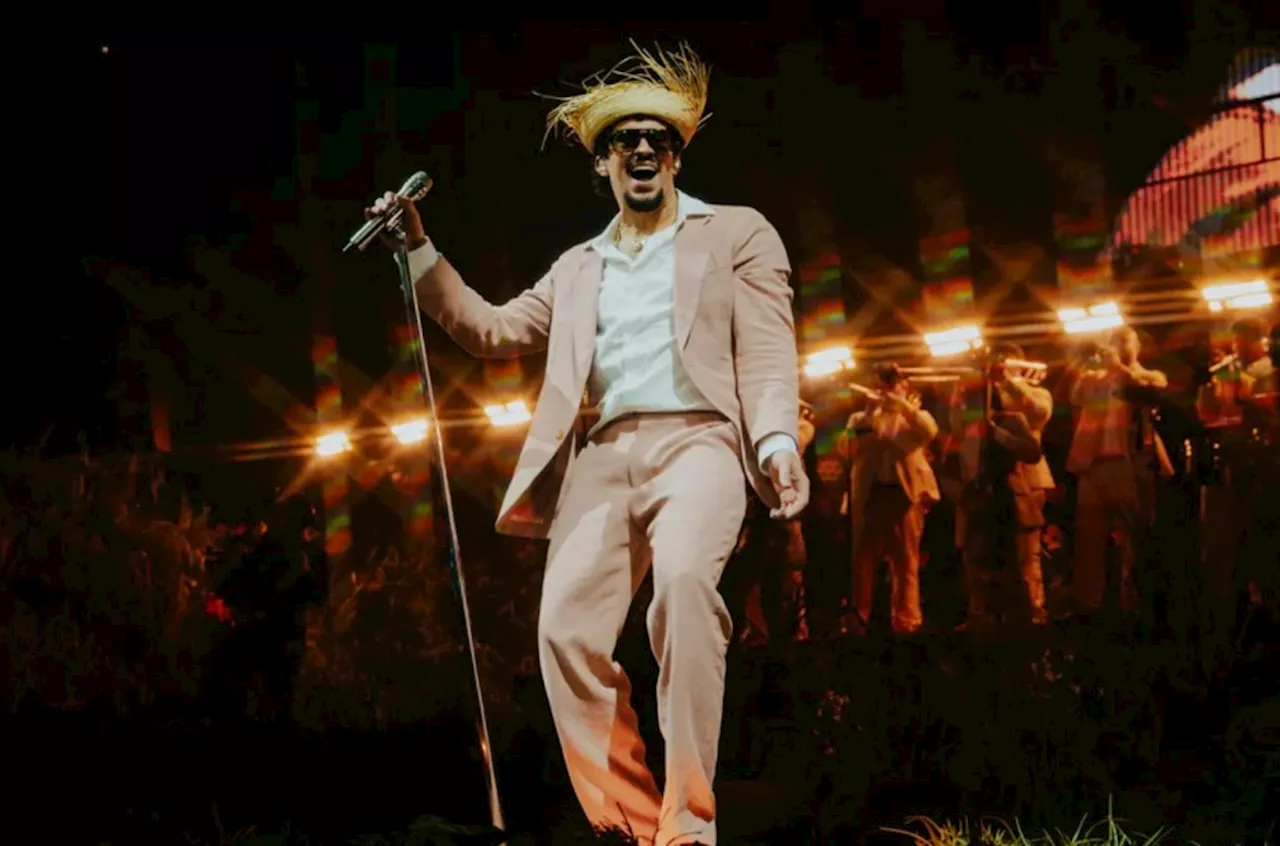
When an artist rooted in Latino culture took center stage, performing largely in Spanish, the response exposed a fault line that has been widening for years. For many viewers, the moment felt affirming. It reflected a version of America that is multilingual, diasporic, and shaped by migration and memory. For others, it felt disorienting, even threatening. The backlash was immediate and revealing, not because it focused on musical taste, but because it questioned belonging.
This is where the Super Bowl reveals its second identity. It is not just entertainment. It is a stage where Americans rehearse their ideas about who counts and who does not. When a halftime performance sparks debates about language, patriotism, and cultural legitimacy, the event has moved beyond spectacle and into politics, not the partisan kind, but the social kind that governs everyday life.
Anthropologists often describe rituals as mirrors. They do not create values so much as expose them. The Super Bowl does this annually, compressing national anxieties into a single evening. The discomfort some viewers expressed had little to do with choreography or sound quality. It stemmed from the realization that the image of America they expected to see no longer aligns with the country as it exists.
What made this moment particularly instructive was the reaction to the reaction. Alternative performances were proposed. Commentators framed the halftime show as an ideological statement rather than an artistic one. The insistence that something had been taken away revealed a deeper fear, not of exclusion, but of displacement. When representation expands, it is often misinterpreted as loss by those accustomed to being centered.
The Super Bowl has always trafficked in the language of unity. Flags unfurl. Anthems play. Military flyovers reinforce a shared narrative. But unity has never meant uniformity. What feels new is the intensity with which cultural symbols are contested in spaces once assumed to be neutral. The halftime show has become one of those spaces, carrying expectations it was never designed to hold.
And yet, this tension also signals possibility. The fact that a single performance can generate such debate suggests that culture still matters, that representation still carries meaning, that people are paying attention. In a society where political dialogue often feels abstract or distant, moments like these bring questions of identity into sharp focus.
The Super Bowl, for all its excess and commercialism, remains a rare communal event. Its power lies not in its ability to unite everyone, but in its ability to show who we are when we come together. This year, it showed a country negotiating its image in real time, grappling with the difference between tradition and reality.
That is what makes the Super Bowl a cultural mirror. It reflects not an idealized version of America, but a living one. Complex. Contradictory. Still in motion. And every year, whether we want it to or not, it asks the same question. Who do we see when we look at ourselves, and who do we refuse to recognize.