
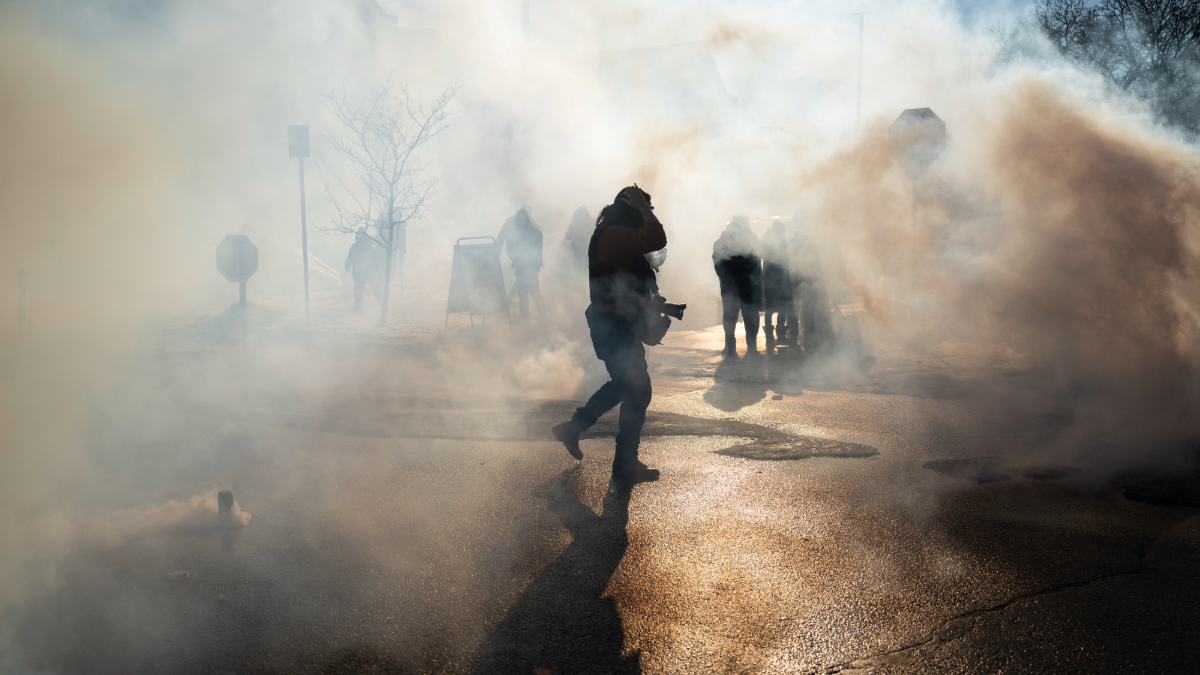
Across the country, immigration enforcement has moved from a policy debate to a lived social reality. In recent months, a series of highly visible ICE raids has sparked widespread public outcry, pushing the agency into the center of a national conversation about power, belonging, and the role of government in everyday life. What might once have unfolded quietly now happens in full view of communities, and the response has been loud, emotional, and sustained.
In city after city, residents have taken to the streets calling for ICE to leave their neighborhoods altogether. These protests are not limited to immigrant communities alone. They include teachers, students, labor organizers, faith leaders, and longtime residents who say the presence of federal immigration agents has changed the feeling of their cities. People describe a sense of fear settling into ordinary routines, parents hesitating to send children to school, workers unsure whether a normal day could end in detention.
What is striking is how quickly this issue has become social rather than abstract. Immigration enforcement is no longer discussed only in terms of borders or legislation. It is discussed in terms of streets, workplaces, schools, and homes. Raids carried out in residential areas and at job sites have blurred the line between federal authority and community life, forcing local populations to confront what enforcement looks like when it arrives at their doorstep.
Protests demanding that ICE leave have emerged in response to that intrusion. Demonstrators often frame their message not just as opposition to deportations, but as a defense of community safety and dignity. Signs calling for abolition or removal reflect a belief that enforcement tactics have grown disconnected from the values many cities claim to hold. The chant is less about policy detail and more about presence. Who belongs here. Who decides. Who is protected.
Students have played a visible role in this movement. Walkouts and campus demonstrations reflect a generational shift in how young people understand civic engagement. For many of them, immigration is not a distant political issue but a personal one involving classmates, neighbors, or family members. Their protests challenge institutions to reconcile lessons about democracy and justice with the realities unfolding outside classroom walls.
Local governments have responded unevenly. Some city leaders have sought to limit cooperation with federal agents or restrict access to municipal spaces. Others argue their hands are tied, citing federal authority and legal constraints. The result is a patchwork of responses that further intensifies public frustration. When local officials appear unable or unwilling to intervene, communities often turn to protest as the remaining form of collective power.
From a broader perspective, the backlash against ICE reflects a deeper crisis of trust. Many Americans increasingly question how and for whom institutions operate. Immigration enforcement has become a symbol of that skepticism, representing a government presence that feels imposed rather than protective. The demand for ICE to leave is as much about restoring a sense of agency as it is about changing policy.
Anthropologically, moments like this reveal how societies negotiate boundaries of inclusion. Enforcement agencies do not operate in a vacuum. They function within social environments shaped by history, race, labor, and law. When those agencies are perceived as violating communal norms, resistance often takes a moral rather than legal form. People protest not only because they believe something is wrong, but because they believe it should not be happening here.
What distinguishes the current moment is the persistence of the response. These are not isolated demonstrations. They are part of a sustained movement that reframes immigration enforcement as a social issue embedded in daily life. The call for ICE to leave reflects a desire to reclaim neighborhoods as spaces of safety rather than surveillance.
The debate over immigration policy will continue, as it always has. But the public outcry surrounding ICE raids suggests a shift in how that debate is being waged. It is no longer confined to courts or Congress. It is happening in public squares, school hallways, and city streets. In those spaces, the question being asked is not only what the law allows, but what a society is willing to accept.
That question lingers long after the protests disperse. And it is one that will continue to shape how Americans understand power, community, and belonging in the years ahead.