Opinion: Growing Up in the Age of Artificial Intelligence
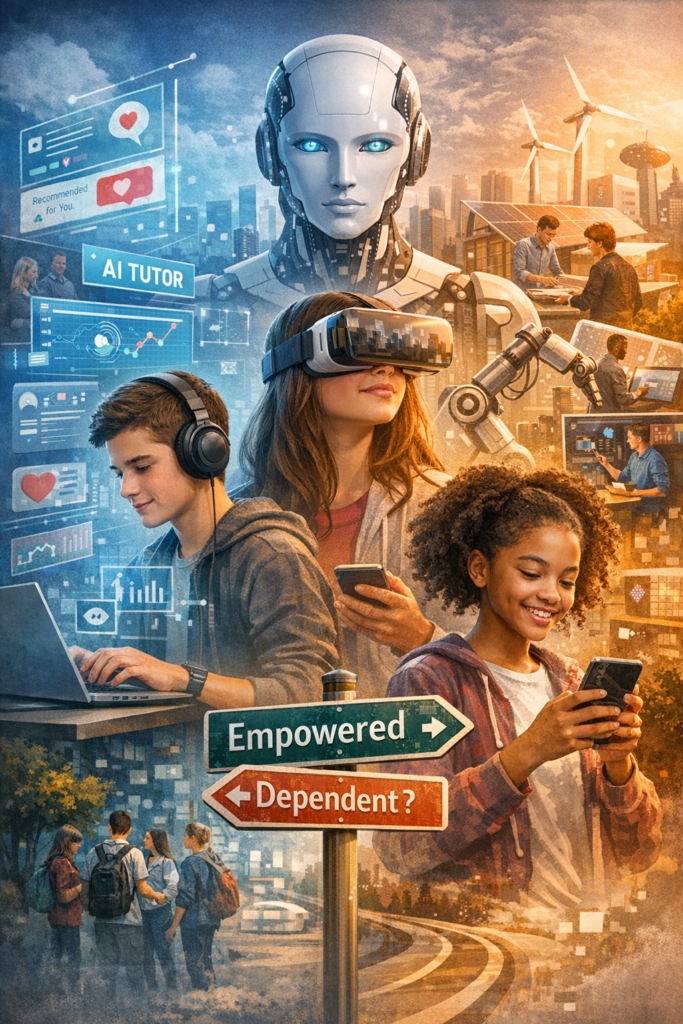
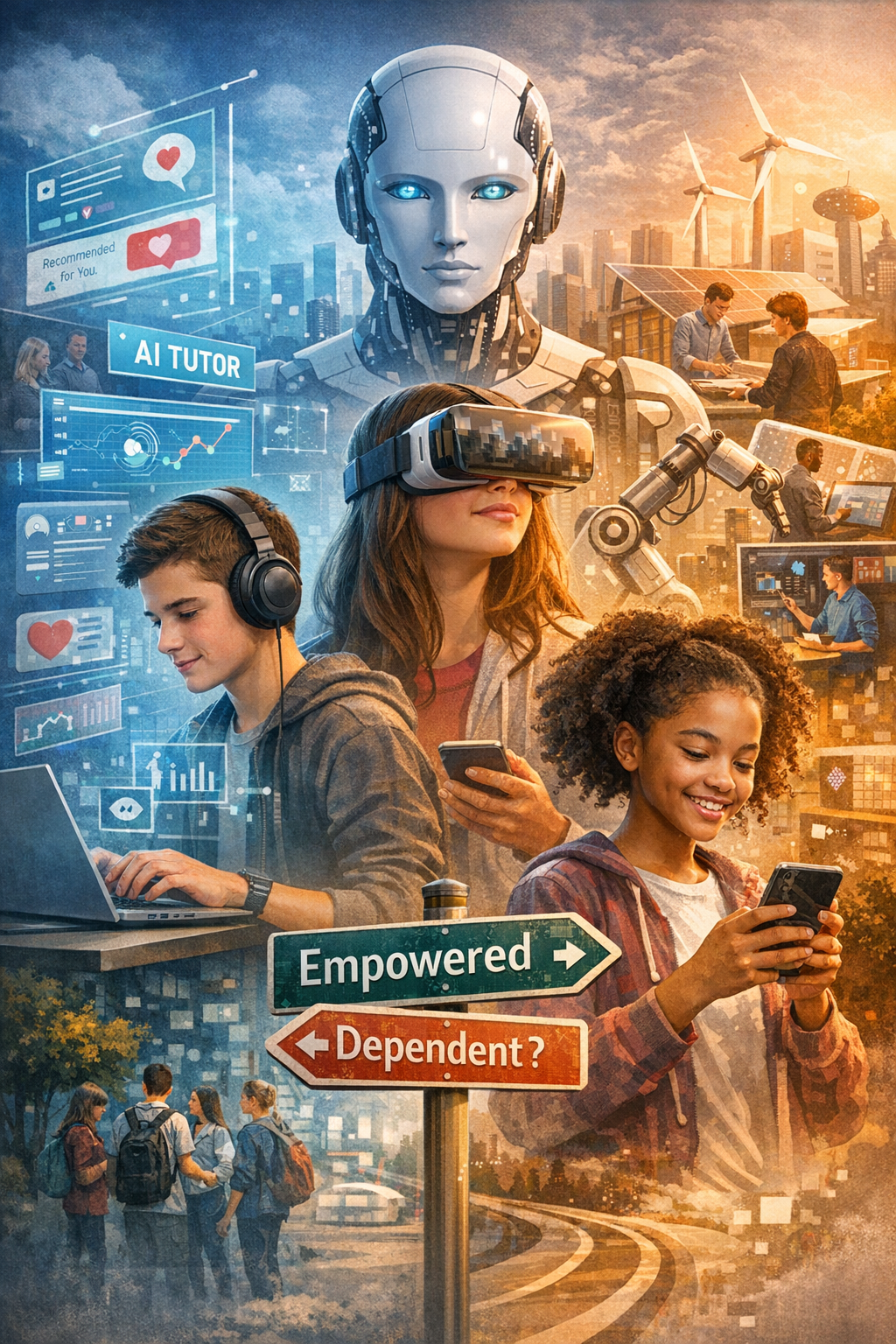
Artificial Intelligence is no longer a distant vision of the future — it’s a living, breathing presence in the lives of younger generations. From the apps they use to communicate with friends, to the platforms where they learn, create, and play, AI is shaping behavior, identity, and even values. The question we must ask ourselves is not whether AI affects the next generation — it already does — but whether it empowers them, fosters dependency, or does a little of both.
AI in Education: Personalized Learning or a Shortcut to Dependence?
One of the clearest ways AI impacts youth is in education. Adaptive learning platforms now analyze students’ strengths, weaknesses, and learning styles, delivering personalized lessons that adjust in real-time.
The benefits are undeniable: students can progress at their own pace, receive instant feedback, and explore subjects in a gamified and interactive way. AI tutors can offer support in ways traditional classrooms sometimes cannot, creating opportunities for engagement that were previously impossible.
Yet, there are risks. If students rely too heavily on algorithms to provide answers or guide their study habits, they may lose opportunities to develop critical thinking and independent problem-solving. Education is about more than results — it’s about nurturing curiosity, resilience, and the confidence to explore unknown paths.
Social Media and AI: Connection, Curation, and Consequence
Beyond academics, AI governs much of how young people socialize. Social media platforms use algorithms to curate content, suggest connections, and even moderate behavior.
The upside: feeds are personalized, entertainment is abundant, and harmful content can be filtered more efficiently than ever before. The downside: algorithm-driven feeds create echo chambers, limiting exposure to diverse ideas and experiences. Social comparison is amplified when engagement metrics — likes, views, shares — become measures of self-worth, potentially impacting mental health and social development.
AI in social media doesn’t just influence what young people see — it shapes how they see themselves. And that is a powerful, double-edged force.
Creativity Reimagined
AI is transforming the way young creators approach art, music, and writing. Tools that generate visuals, compose music, or suggest storylines allow unprecedented experimentation. Teenagers and young adults can produce content faster, explore ideas more freely, and reach a broader audience with fewer barriers.
But these tools raise philosophical questions: if a machine suggests your next creative step, where does your originality begin? AI can inspire, guide, and accelerate creative output, but it cannot replace the human spark that drives imagination. The challenge for young creatives is learning to collaborate with AI while maintaining ownership of their vision.
Preparing for a Future Workforce
AI is reshaping the workforce, and younger generations must adapt to remain relevant. Routine, repetitive jobs are increasingly automated, while roles requiring creativity, emotional intelligence, and problem-solving are in higher demand. Early exposure to AI tools can develop digital literacy and adaptability, but access is not equal. Socioeconomic disparities risk leaving some young people behind in a world where AI fluency will be a core skill.
The solution isn’t simply teaching coding or AI use; it’s fostering skills that machines cannot replicate: empathy, ethical reasoning, intuition, and collaboration.
Finding Balance: Human Agency in a Machine-Mediated World
AI is neither inherently good nor bad. Its value depends entirely on how it is used. Parents, educators, and society at large must guide young people to balance technology with human experience. Offline activities, unstructured play, and interpersonal relationships are just as important as virtual learning, AI-driven creation, and smart tools.
Digital literacy should be paired with lessons in critical thinking and emotional intelligence. Youth must understand that while AI can provide solutions, it cannot replace judgment, creativity, or moral reasoning.
Conclusion: The AI Generation is Here
The AI generation has arrived — a cohort of young people whose lives are deeply intertwined with technology. They have access to tools and resources previous generations could only dream of. But with this opportunity comes responsibility.
Society’s role is to ensure that AI empowers rather than diminishes, that it enhances human potential without replacing it. Technology should amplify the best of what makes us human, not substitute it. The next generation has incredible potential — but only if we guide them to harness AI thoughtfully, creatively, and responsibly.
As we look to the future, one truth is clear: the AI generation is not a distant concept. It is here, and how we nurture it today will define the society of tomorrow.