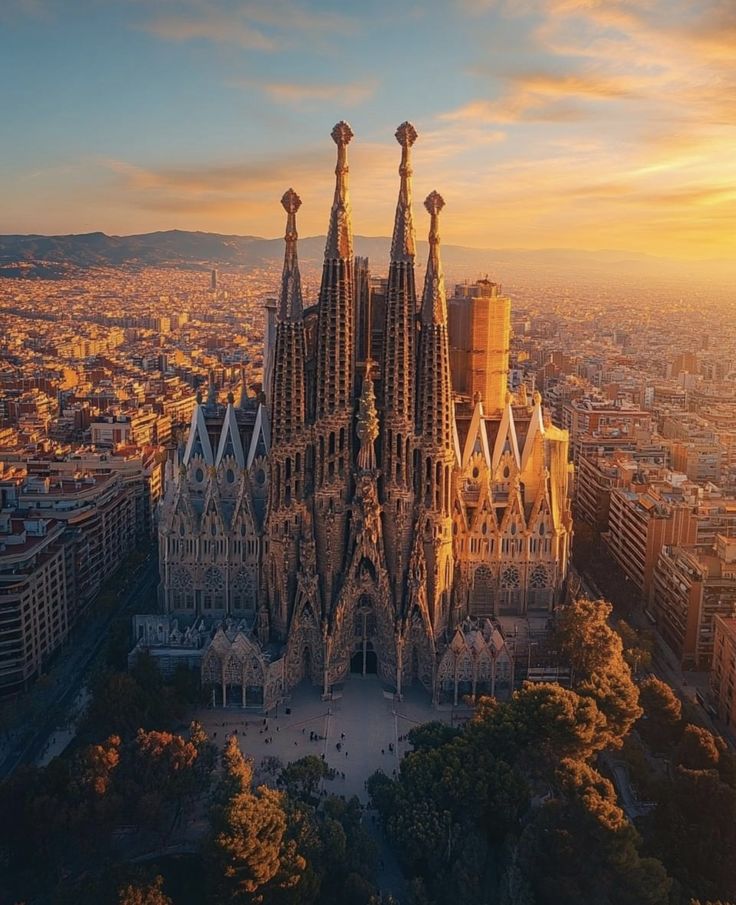
The legendary Basílica de la Sagrada Família in Barcelona, Spain, has officially reached its final planned structural height, marking a historic milestone after 144 years of continuous construction — one of the longest-running architectural projects in modern history.
Designed by visionary architect Antoni Gaudí, the basilica represents the pinnacle of modernist religious architecture, blending spirituality, nature-inspired design, and engineering innovation into a single monumental structure.
A Vision That Spanned Centuries
Construction of the Sagrada Família began in 1882, originally intended as a traditional neo-Gothic church. However, when Gaudí assumed leadership of the project, he transformed it into something far more ambitious.
Gaudí envisioned the basilica as a living architectural organism, drawing inspiration from forests, mountains, and natural light. His philosophy rejected rigid symmetry in favor of organic geometry, where columns resemble tree trunks branching toward vaulted ceilings.
The basilica’s towers were designed to symbolize key Christian figures. The central tower, dedicated to Jesus Christ, now stands as the dominant architectural feature, reaching the planned maximum height envisioned in Gaudí’s original plans.
Engineering Across Generations
One of the most remarkable aspects of the Sagrada Família project is its continuity across multiple historical eras.
Construction survived:
• Political upheavals in Spain
• The Spanish Civil War
• Technological transitions from manual stone carving to modern computer-aided modeling
Modern engineers and architects used advanced 3D modeling, laser-guided stone cutting, and historical blueprint reconstruction to ensure fidelity to Gaudí’s artistic intent.
The challenge was not only structural but philosophical — preserving the spirit of a 19th-century design while utilizing 21st-century technology.
Light, Nature, and Spiritual Architecture
The basilica’s interior is renowned for its extraordinary use of light. Colored stained glass windows cast shifting patterns across stone surfaces, creating what many visitors describe as a sacred and almost forest-like atmosphere.
Columns branch outward like trees supporting a canopy, symbolizing harmony between human construction and natural order. The structure’s geometry reflects Gaudí’s belief that nature is the ultimate architect.
Tourism and Cultural Impact
The Sagrada Família is one of the most visited religious sites in the world, drawing millions of tourists annually.
Local authorities expect the completion-height milestone to further elevate Barcelona’s global cultural prominence. The basilica is not only a place of worship but also a symbol of artistic endurance and international heritage.
The project is registered as a UNESCO World Heritage Site component of Barcelona’s architectural legacy, highlighting its universal historical significance.
A Monument Built by Time Itself
The Sagrada Família stands as more than a church or tourist attraction — it is a testament to human patience, creativity, and intergenerational collaboration.
Few structures in modern history have required such sustained dedication. The basilica’s journey from 19th-century conception to modern completion height reflects humanity’s ability to preserve artistic ambition across centuries.
As sunlight continues to pass through its stained glass and tower above Barcelona’s skyline, the Sagrada Família remains a living symbol of architecture, faith, and perseverance.
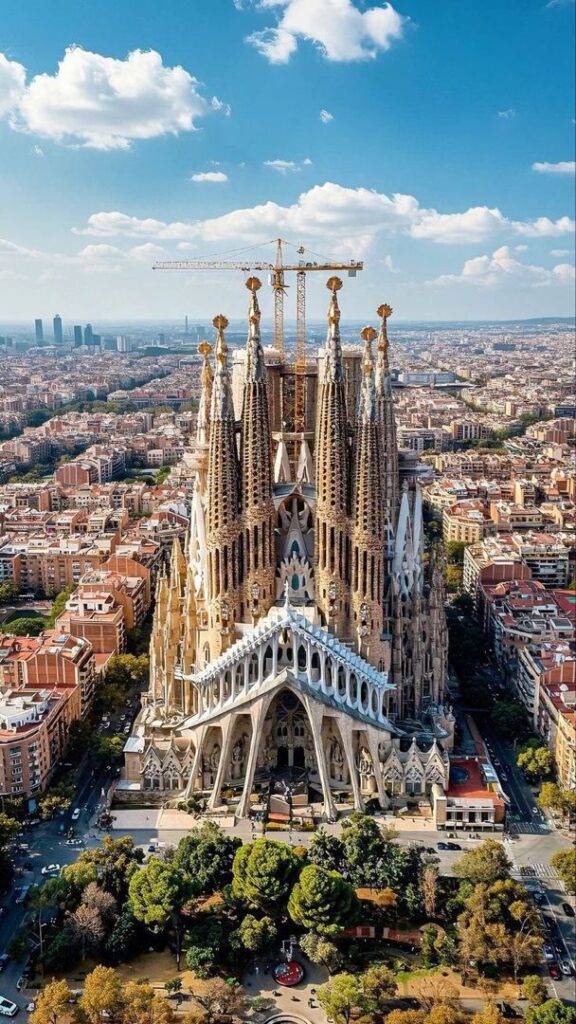
History reaches its peak — the Sagrada Família in Barcelona has achieved its final architectural height after 144 years of construction.