
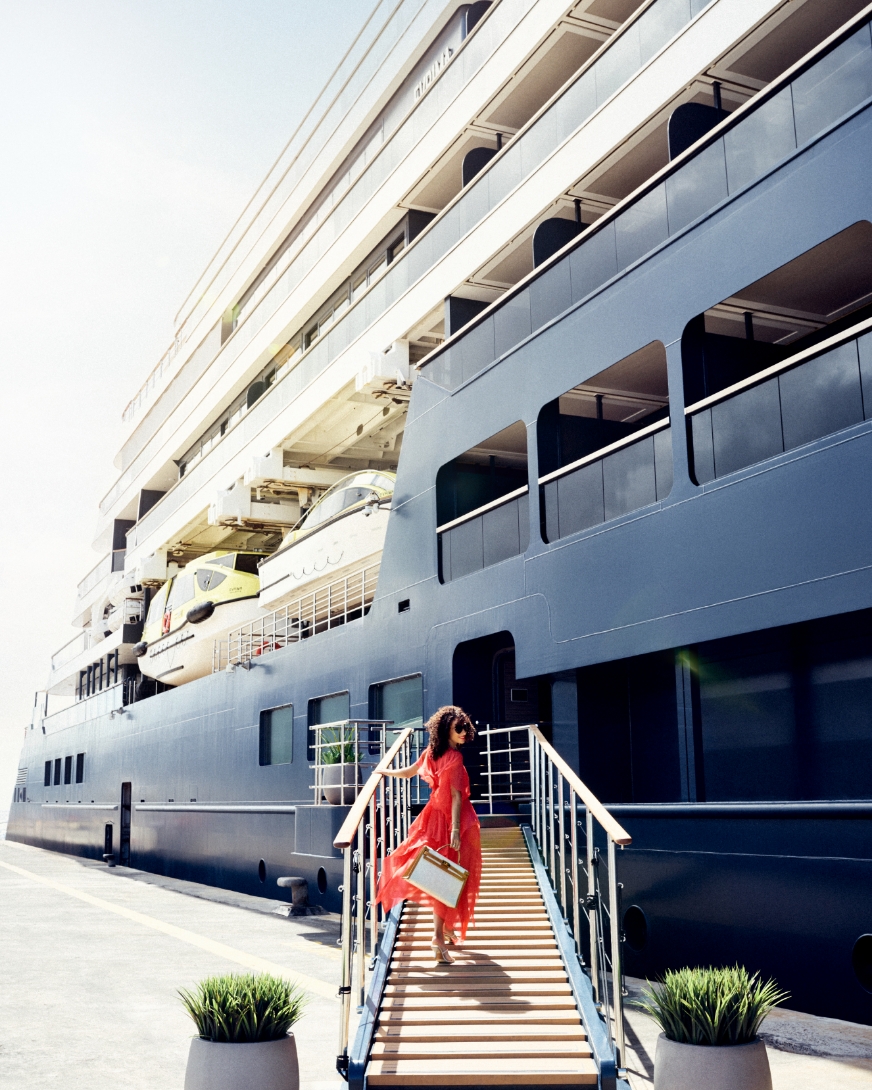
Luxury travel has shifted. The appetite is no longer for scale; it is for precision. Discerning travelers are moving away from 5,000-passenger mega-ships and toward vessels that feel more like private floating resorts. At the center of this shift are branded hospitality giants entering the maritime space, most notably the The Ritz-Carlton Yacht Collection and the Four Seasons Yachts.
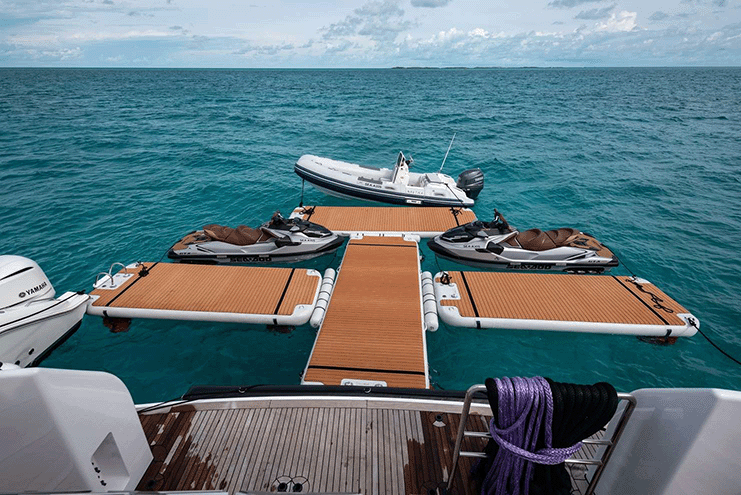
These are not cruises in the traditional sense. They are curated, design-forward voyages engineered to replicate the service culture of a five-star hotel — at sea.
The Ritz-Carlton Yacht Collection launched with Evrima, a vessel carrying roughly 300 guests — a fraction of conventional cruise capacity. The design language mirrors a contemporary coastal resort: muted palettes, expansive suites, private terraces, marina platforms for water sports. The emphasis is space per guest and staff-to-guest ratios that resemble luxury hotels rather than cruise ships.
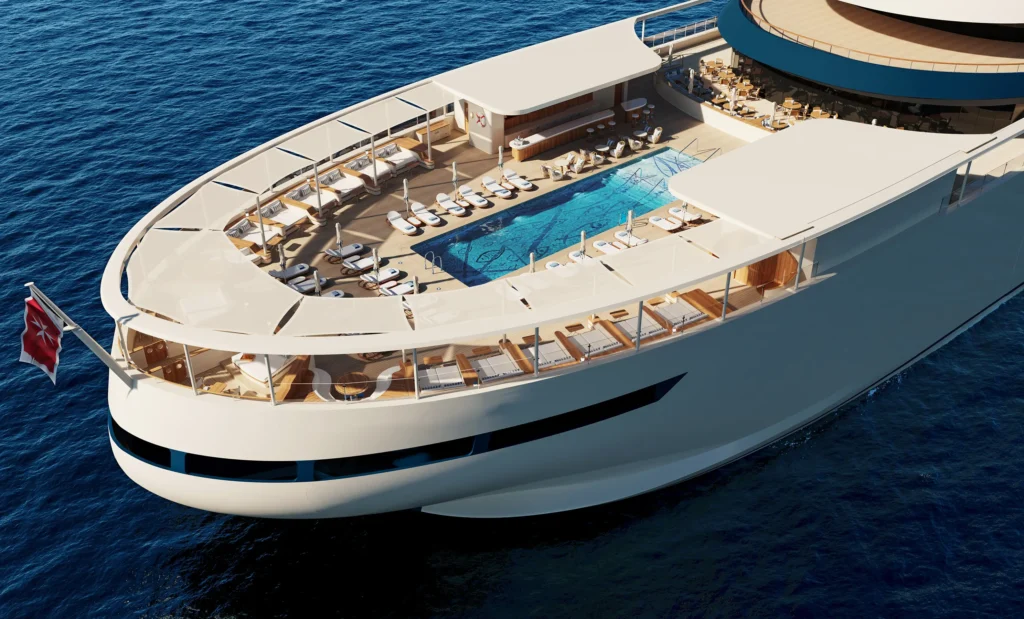
Four Seasons Yachts, entering the market with its first vessel, is raising the stakes further. Early disclosures emphasize multi-level suites, a “Funnel Suite” with nearly 10,000 square feet of combined indoor-outdoor living space, and a yacht profile that reads more Monaco marina than Caribbean cruise. The positioning is clear: this is hospitality branding extending into experiential travel.
This matters because brand equity is the product. Guests already loyal to Four Seasons or Ritz-Carlton are not experimenting with cruising; they are extending their lifestyle vertically into the sea.
Why Yacht Travel Is Trending
There are four structural drivers behind the yacht cruise surge:
- Privacy and Scale
Post-pandemic travel psychology still favors control and lower density. Smaller vessels mean fewer passengers, personalized itineraries, and less congestion. - Access to Niche Ports
Large ships are restricted to major ports. Yachts can dock in smaller harbors — St. Barts instead of a generic Caribbean hub, Portofino instead of a distant transfer point. That proximity translates to time saved and exclusivity gained. - Hybrid Itineraries
These voyages often blur the line between cruise and private charter. Marina platforms allow direct water access for paddleboarding, swimming, and tender excursions. Shore experiences lean toward curated tastings, art walks, and cultural immersion rather than bus tours. - Experience as Status
Ultra-luxury travelers increasingly value narrative over possession. A yacht itinerary across the Adriatic or Aegean signals discretion and discernment. It is quieter than a private jet post, but no less intentional.
Economic and Market Implications
The entry of established hotel brands into maritime luxury suggests confidence in sustained high-net-worth demand. Unlike traditional cruise lines that rely on volume economics, these yachts operate on margin and exclusivity. Suites are all-balcony. Pricing aligns more with luxury safari lodges or private villa rentals than with mainstream cruise fares.
This also signals a strategic hedge. Luxury hospitality groups are expanding into mobile assets to capture guests who might otherwise charter privately. The value proposition becomes: the privacy of a yacht without the operational friction of ownership.
What We Are Likely to See Next
Several trends are already emerging:
More Brand Extensions
Expect additional luxury hotel groups to explore small-ship ventures. The model offers brand visibility in elite travel corridors like the Mediterranean, Caribbean, and Northern Europe.
Longer Stays at Sea
Instead of port-intensive itineraries, future routes may incorporate more “sea days” designed as floating resort experiences with wellness programming, culinary residencies, and guest speakers.
Sustainability Pressure
Affluent travelers are increasingly scrutinizing environmental impact. Hybrid propulsion systems, advanced wastewater treatment, and carbon-offset integration will likely become competitive differentiators rather than marketing add-ons.
Ultra-Customization
Dynamic itineraries influenced by weather, local events, or guest preference could become standard. Technology will enable real-time personalization of excursions, dining, and onboard programming.
The Strategic Shift
Luxury yacht cruising is not simply a trend; it reflects a recalibration in what affluent travelers expect. They want intimacy without sacrifice, prestige without spectacle, and mobility without compromise.
The Ritz-Carlton Yacht Collection and Four Seasons Yachts are not competing with traditional cruise lines. They are competing with private villas, boutique hotels, and chartered superyachts. The battlefield is not capacity — it is experience density.
The question is not whether this segment will grow. The question is how quickly luxury consumers will normalize sea-based hospitality as an extension of their residential lifestyle.