The application is one page long. The Georgia Trust for Historic Preservation is accepting letters of interest for three grant programs through Friday, November 20, 2026, and a single one-page letter to Ben Sutton, the Trust’s director of preservation, puts an organization in consideration for any of them. The largest of the three is reserved for exactly the buildings The Social Register’s readers care most about: historic Black sites inside Atlanta, eligible for up to $20,000.
The three programs together cover most of what ailing historic buildings need. Two are matching grants open to nonprofits across Georgia. The third funds physical preservation and interpretive work at African American heritage sites in Atlanta, and its money comes from a family fund named for two Atlantans who spent their lives on Black causes in this city. Full applications, for organizations invited to submit them, are due in February 2027. The letter is the whole ballgame until then.
The three programs
The 1772 Foundation Grants for Georgia offer matching grants of up to $10,000 to private nonprofit organizations for exterior restoration and rehabilitation of historic buildings and sites, for projects carried out in 2027. A new pilot inside the same program offers $10,000 grants for climate action: energy audits, insulation, alternative energy, efficient HVAC systems, appliances, and storm windows. Two limits apply. Buildings currently in use as schools or churches are not eligible, and every project must meet the Secretary of the Interior’s Standards for Rehabilitation.
The Callahan Incentive Grants, funded by longtime Georgia Trust supporters Barbara and Les Callahan, offer matching grants of $2,500 to $10,000 to nonprofit or government organizations for capital projects, the bricks-and-mortar work of roofs, masonry, and structural repair, anywhere in the state.
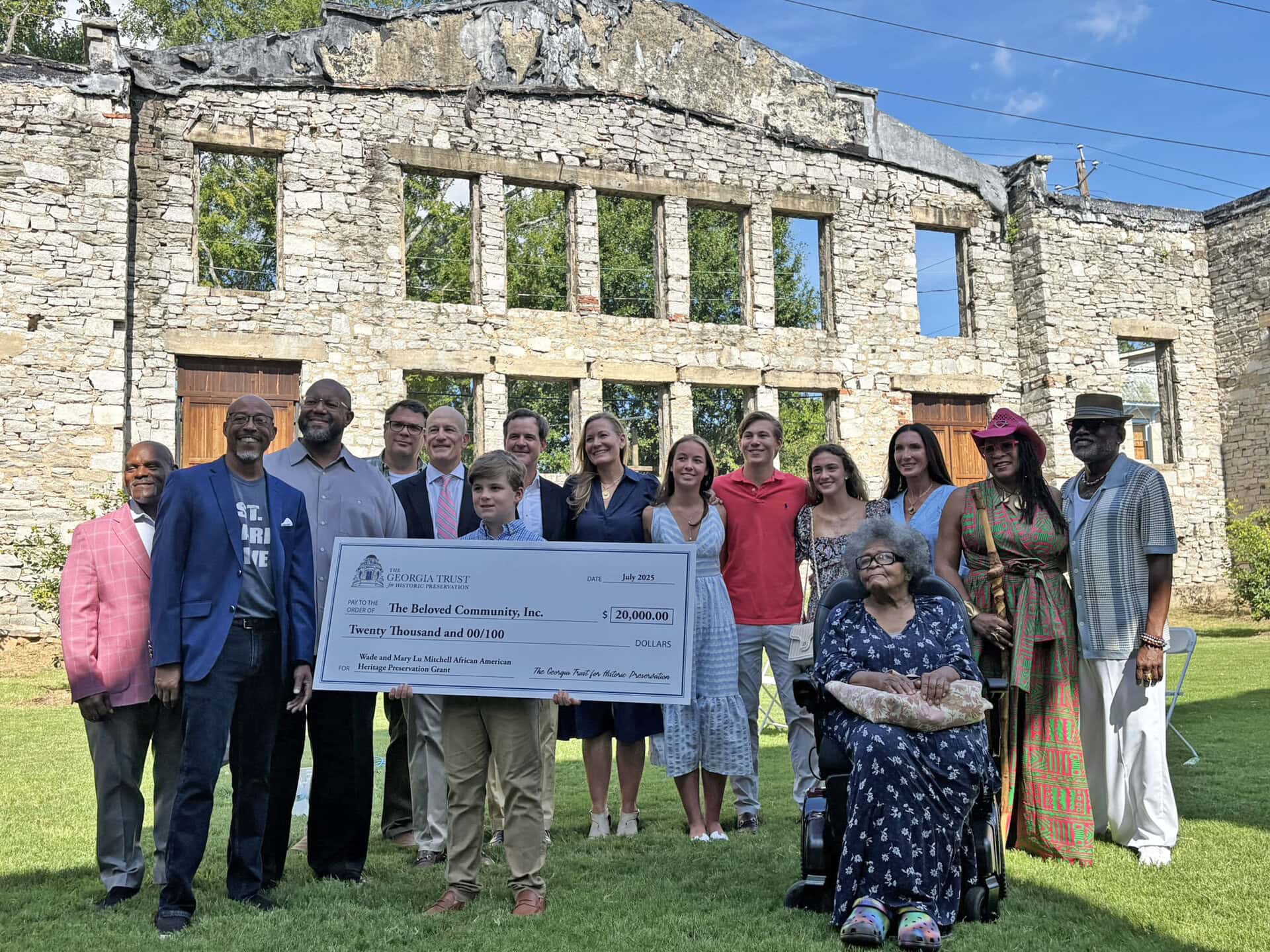
The Mitchell grant is the one to read twice. The Wade and Mary Lu Mitchell African American Heritage Preservation Grant, made available through the Mitchell Family Fund at the Community Foundation for Greater Atlanta, funds up to $20,000 for African American heritage preservation, and it is limited to historic sites in Atlanta. It pays for physical preservation projects and for interpretive projects, the exhibits, markers, and programming that bring a site’s history to public attention. In a state full of worthy buildings, an Atlanta-only, Black-heritage-only pool is rare, and it is deliberately small enough that a well-chosen project can be funded whole.
Who should write the letter
The realistic candidate list is longer than most stewards assume. A Black church that owns a historic building it no longer worships in. A neighborhood association holding a Rosenwald-era schoolhouse. A small museum in a landmark home. A fraternity or civic organization sitting on a century-old headquarters. If the organization is a nonprofit, the site is in Atlanta, and the project either repairs the building or interprets its history, the Mitchell grant was written with that application in mind.
The matching structure of the other two programs deserves a clear head. A match means the organization must raise an equal amount from other sources, which rewards groups that treat the grant as the anchor of a small campaign rather than the whole campaign. The climate pilot is the exception worth exploiting: $10,000 toward an energy audit and insulation is unglamorous money that lowers a historic building’s operating costs every month after it is spent.
The calendar, laid out plainly: letters of interest due Friday, November 20, 2026. Not every letter earns an invitation. Invited full applications are due in February 2027. That is roughly twelve weeks between the door opening and the real paperwork, which is enough time to get a contractor’s estimate and a match commitment, if the letter goes out this fall. Eligibility details and letter instructions are posted by the Georgia Trust at georgiatrust.org under Grants and Fellowships, and the Trust can be reached at 404-885-7817.
Landmarks rarely die in a fire. They die in a decade of small deferrals, a roof patched one year too late. Twenty thousand dollars, requested on one page before Thanksgiving, is how some of those deferrals end.
The Social Register’s event directory tracks the season’s galas, benefits, and society evenings. Plan your next evening there.