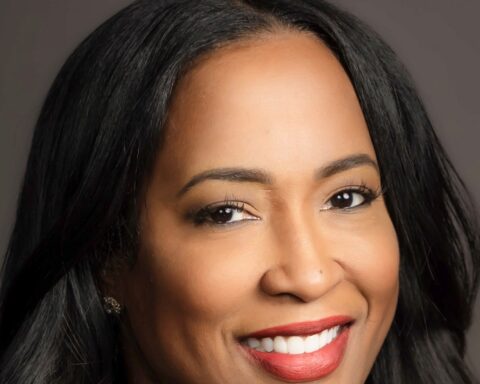

Penny Brown Reynolds was elected secretary of state of Georgia on Tuesday, defeating Republican state Rep. Tim Fleming with 55.6 percent of the vote to his 44.4 percent. She becomes the first Black person elected to the office, and the first Black woman. The secretary of state is Georgia’s chief elections officer, the official who maintains the voter rolls, oversees voting in all 159 counties, and certifies the results. In January, that office changes hands, and changes history.
She succeeds Brad Raffensperger, who left the seat to run for governor. The office she inherits has sat at the center of American politics since 2020, when Georgia’s count and its certification were contested on the national stage. Brown Reynolds ran for it as a jurist, not a politician. In her words, the office “acts as a firewall between political pressure and free and fair elections.”
On election night, she told supporters the voters had chosen her “not because I am the first Black woman, first Black period, but because I was the most qualified person,” adding that Georgians wanted someone who “really loves and cares for the people and understands the value of that vote.”
From a vegetable stand to the bench to the ballot
Brown Reynolds is the daughter of a single mother and the granddaughter of a farmer, and she worked her way through college and law school. She went on to break barriers in the state’s executive branch: the first African American chief of staff and executive counsel to a Georgia lieutenant governor, then the first African American to serve as executive counsel to a governor, under Gov. Roy Barnes, who chairs her campaign today.
She became one of Georgia’s youngest judges and served nearly a decade on the Fulton County bench. In the Biden administration she led the civil rights office at the U.S. Department of Agriculture, where her team cut a historic case backlog by more than 90 percent. She has taught at Georgia State University’s Andrew Young School of Policy Studies, and she holds a Ph.D. in criminal justice and an executive certificate from Harvard Kennedy School. Many Georgians also know her from television: for one season she hosted the syndicated “Family Court with Judge Penny.”
The work waiting in January
Her first term runs straight at the 2028 presidential election, in a state that may again decide the presidency. She has pledged a top-to-bottom audit of election administration across all 159 counties, oversight of the state’s new voting system, and a defense of absentee voting. Her signature campaign promise was aimed at the memory of a famous phone call to her predecessor’s office: she would do what is right for Georgia, no matter who is calling.
She was the third Black woman to win one of Georgia’s top offices on Tuesday, alongside Governor-elect Keisha Lance Bottoms and Attorney General-elect Tanya Miller. At the party’s Atlanta celebration, a supporter’s sign read “Black women lead Georgia.” Come January, the three of them will hold the state’s three most consequential offices, and the woman in charge of counting Georgia’s votes will be a judge who spent her career on the value of the vote itself.
The Social Register’s event directory tracks the season’s galas, benefits, and society evenings. Plan your next evening there.