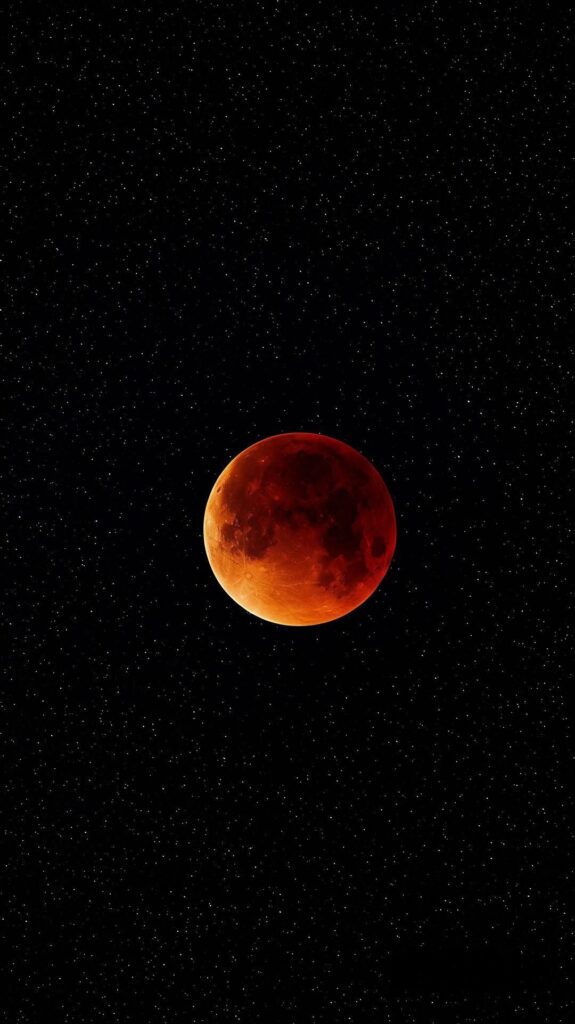
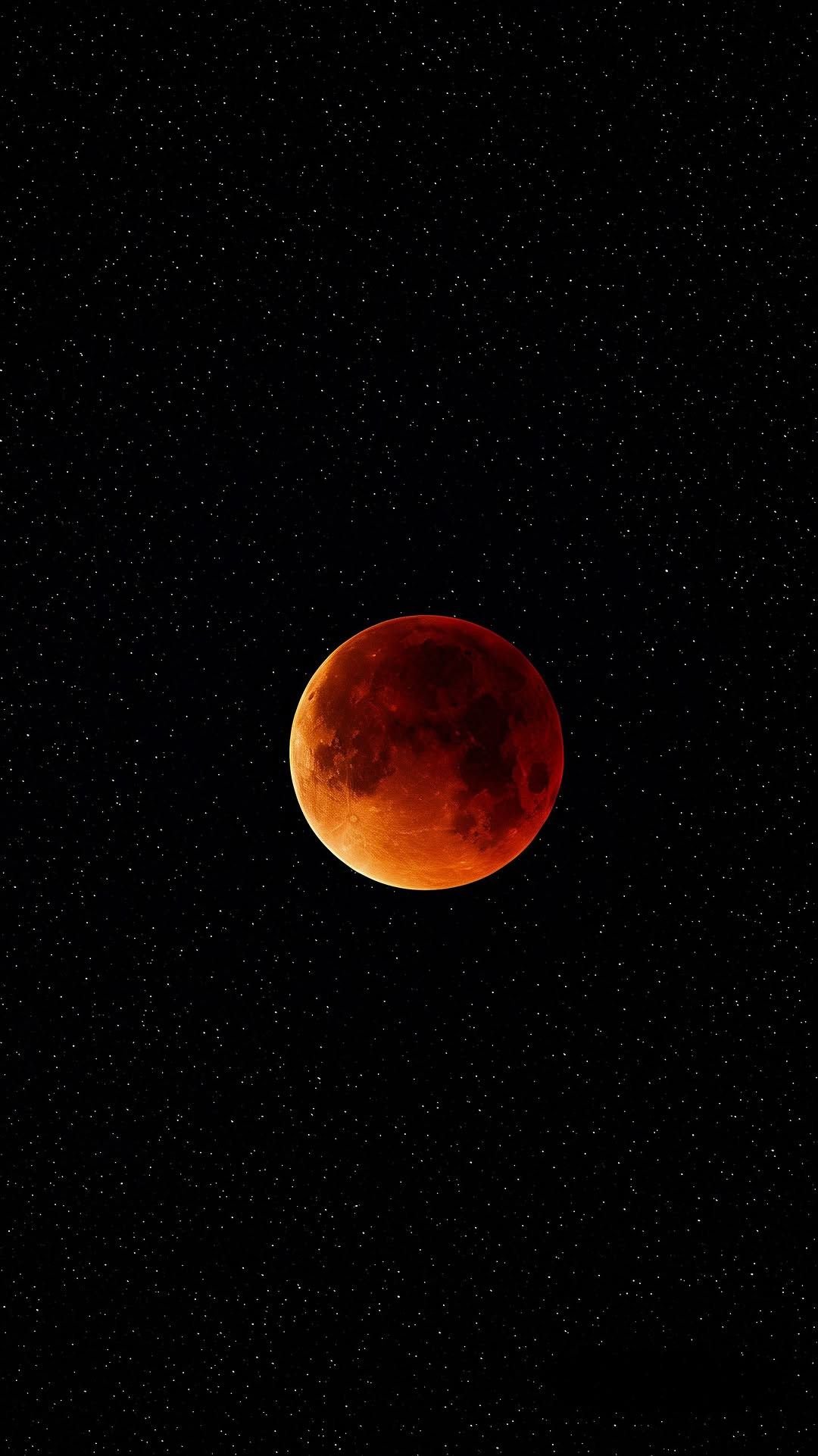
A breathtaking Total Lunar Eclipse is currently underway, offering one of the most widely visible astronomical events in the world. Scientists estimate that more than 3 billion people across multiple continents have the opportunity to witness the phenomenon, depending on weather conditions and local visibility.
Unlike a solar eclipse, which is visible only along a narrow path, a total lunar eclipse can be seen anywhere on Earth where the Moon is above the horizon during the event. That accessibility is part of what makes it such a unifying global moment.
What Is Happening in the Sky
A total lunar eclipse occurs when Earth moves directly between the Sun and the Moon, casting its shadow over the lunar surface. As the Moon passes fully into Earth’s darkest shadow — known as the umbra — it does not disappear. Instead, it transforms.
Because Earth’s atmosphere bends and filters sunlight, shorter blue wavelengths scatter while longer red wavelengths pass through. That filtered light bathes the Moon in deep red and copper tones, creating the dramatic “Blood Moon” effect now visible in many parts of the world.
A Rare but Predictable Event
While lunar eclipses occur a few times each year somewhere on Earth, total eclipses at any specific location are less frequent. What makes tonight’s event especially significant is its broad visibility range, allowing billions to share the same sky spectacle simultaneously.
Astronomers note that lunar eclipses are completely safe to view with the naked eye. No special glasses or protective equipment are required — making it one of the most accessible cosmic events for casual observers.
Cultural and Scientific Significance
Throughout history, lunar eclipses have inspired myths, scientific breakthroughs, and spiritual interpretations. Ancient civilizations often viewed the red Moon as an omen or divine sign. Today, scientists use eclipses to study Earth’s atmosphere and the Moon’s surface properties.
The color and brightness of the eclipsed Moon can even provide clues about atmospheric conditions on Earth, including dust, pollution, and volcanic activity.
A Shared Global Moment
In an era often defined by division and fast-moving headlines, a total lunar eclipse offers something rare: a quiet, collective pause. Families, amateur astronomers, photographers, and students are stepping outside together, looking up at the same celestial alignment.
Social media is already flooded with images captured through smartphones and telescopes, each frame reflecting a slightly different hue depending on geographic location and atmospheric clarity.
Tonight’s total lunar eclipse is more than a scientific event — it is a planetary moment shared by billions, a reminder of Earth’s place in the universe, and proof that sometimes the most extraordinary shows require only looking up.