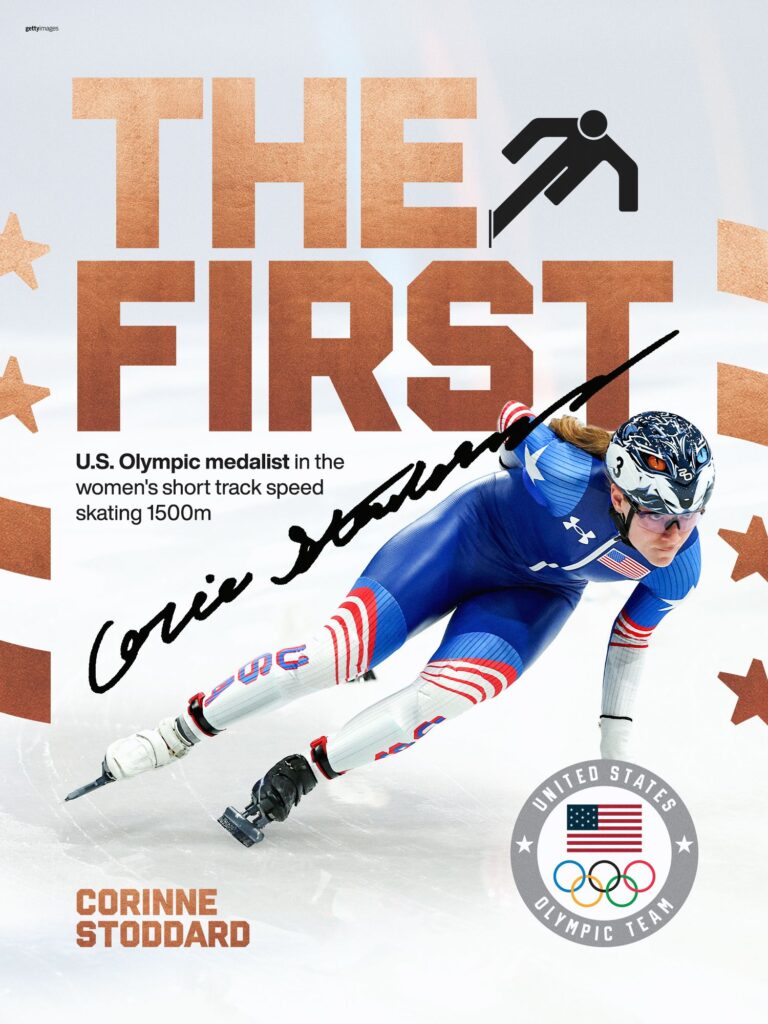
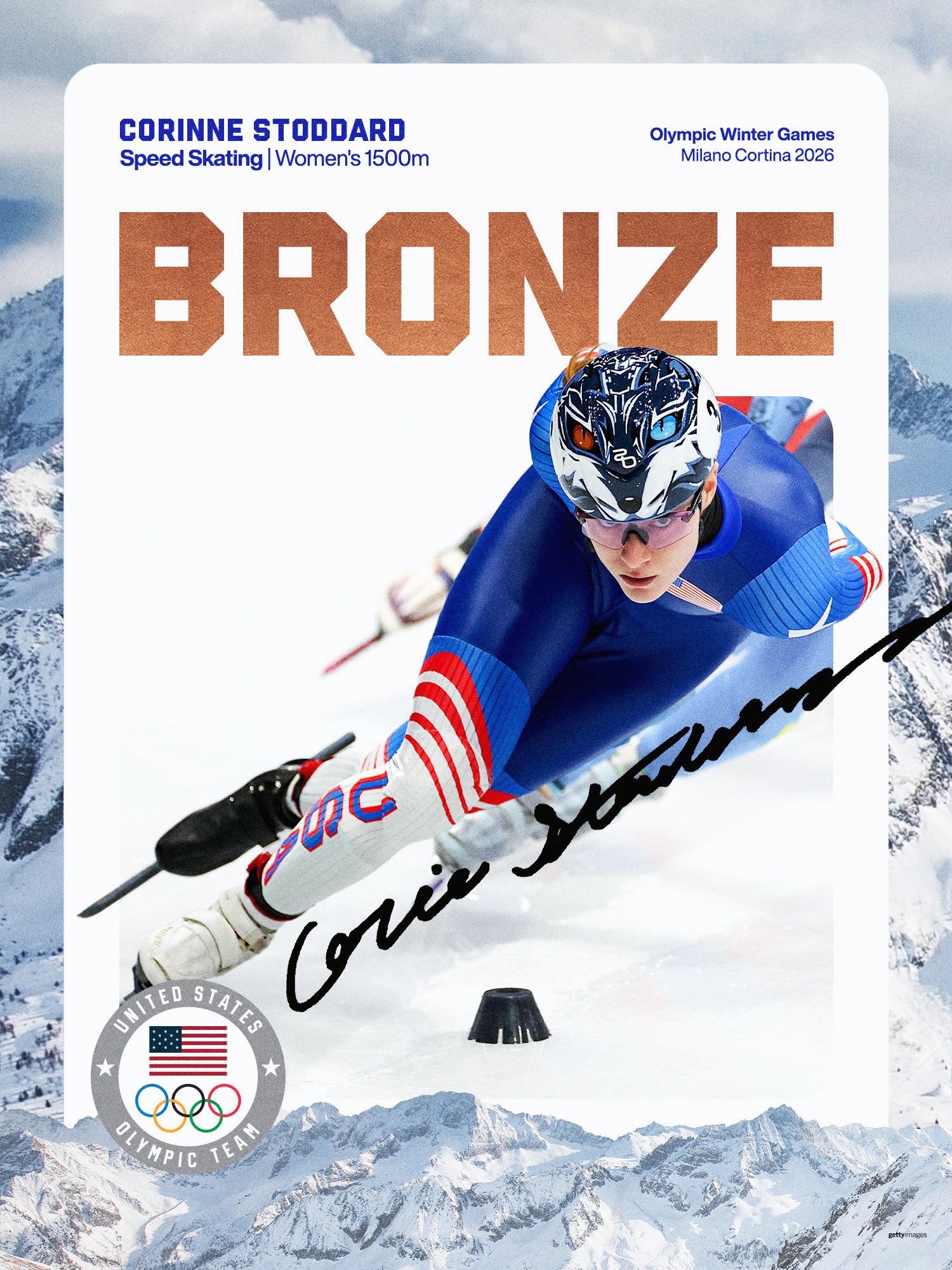
American speed skater Corinne Stoddard delivered the performance of her career, skating to a bronze medal in the women’s 1500m short track at the Winter Olympics and earning her first Olympic podium finish.
In a sport known for split-second decisions, tight corners, and dramatic lead changes, Stoddard showcased patience and tactical intelligence from the opening laps. Staying well-positioned in the pack, she avoided the mid-race collisions and traffic that often define short track racing. When the pace accelerated in the final laps, she responded with power and precision, holding her line through the final turns to secure a place on the podium.
A Breakthrough Moment
The medal marks a major milestone for Stoddard, who has steadily risen through international competition in recent seasons. While she entered the Games as a strong contender, the Olympic stage presents a unique pressure — one that tests both physical conditioning and mental resilience.
Her bronze is more than a personal victory. It represents a resurgence for U.S. women’s short track skating, a discipline historically dominated by Asian and European powerhouses. Stoddard’s finish signals renewed momentum for Team USA in one of the Winter Games’ most unpredictable events.
The Drama of the 1500m
The 1500m distance is often described as a chess match on ice — blending endurance, sprint timing, and strategic positioning. Skaters must conserve energy early while preparing for explosive final laps. Stoddard executed that balance nearly flawlessly.
With two laps remaining, she surged forward, matching the leaders stride for stride. In the final straightaway, she leaned aggressively at the line, ensuring her edge secured bronze in a razor-thin finish.
What This Means Going Forward
At just the beginning of what many expect to be her Olympic prime, Stoddard’s medal could be the first of several on the global stage. Her composure under pressure and closing speed highlight her potential in future World Championships and Olympic events.
For Team USA, the moment stands as a reminder that perseverance, preparation, and precision can turn years of training into a historic breakthrough.