

he Houston Museum of African American Culture (HMAAC) has named Davinia Reed as its new Chief Executive Officer, marking a significant leadership transition for one of Houston’s most influential cultural institutions. Reed steps into the role having previously served as Chief Operating Officer, bringing with her a deep commitment to community engagement, accessibility, and cultural preservation that aligns with the museum’s mission to collect, interpret, and share the material and intellectual culture of African Americans in Houston and beyond.
Reed’s promotion represents a continuation of HMAAC’s focus on expanding its reach and impact. In her years with the museum, she has played a central role in program development, community partnerships, and initiatives designed to make art and history accessible to diverse audiences across the city. Her leadership comes at a time when the institution is increasingly serving as a cultural hub and educational resource, offering exhibitions, film series, virtual tours, and conversations that explore African American experiences and contributions.
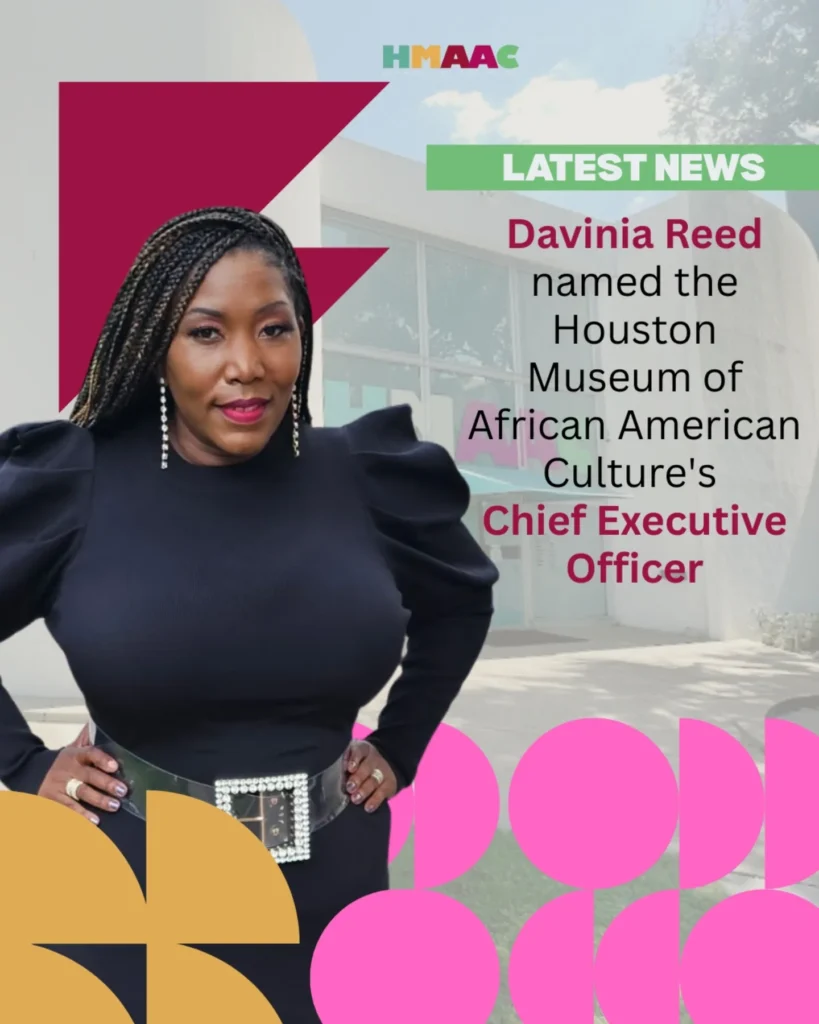
As CEO, Reed will guide HMAAC’s strategic vision, working with staff, board members, artists, and community stakeholders to strengthen the museum’s position as a space for reflection, celebration, and dialogue. Her appointment reflects her longstanding dedication to empowering others and promoting cultural literacy, qualities that have defined her career within and outside the museum sector.
Reed’s leadership follows a period of growth for the museum, which continues to introduce new exhibitions and outreach initiatives. Most recently, HMAAC has broadened its accessibility options with virtual reality technology that allows students and community members across Houston to experience exhibits remotely, part of a broader collaboration with public partners aimed at expanding engagement.
In taking on the role of CEO, Reed inherits an institution rooted in legacy and poised for future evolution. Her vision emphasizes both preservation and innovation — honoring the past while expanding the museum’s capacity to serve as a “cultural portal” for all people, inspiring discovery and learning for generations to come.

