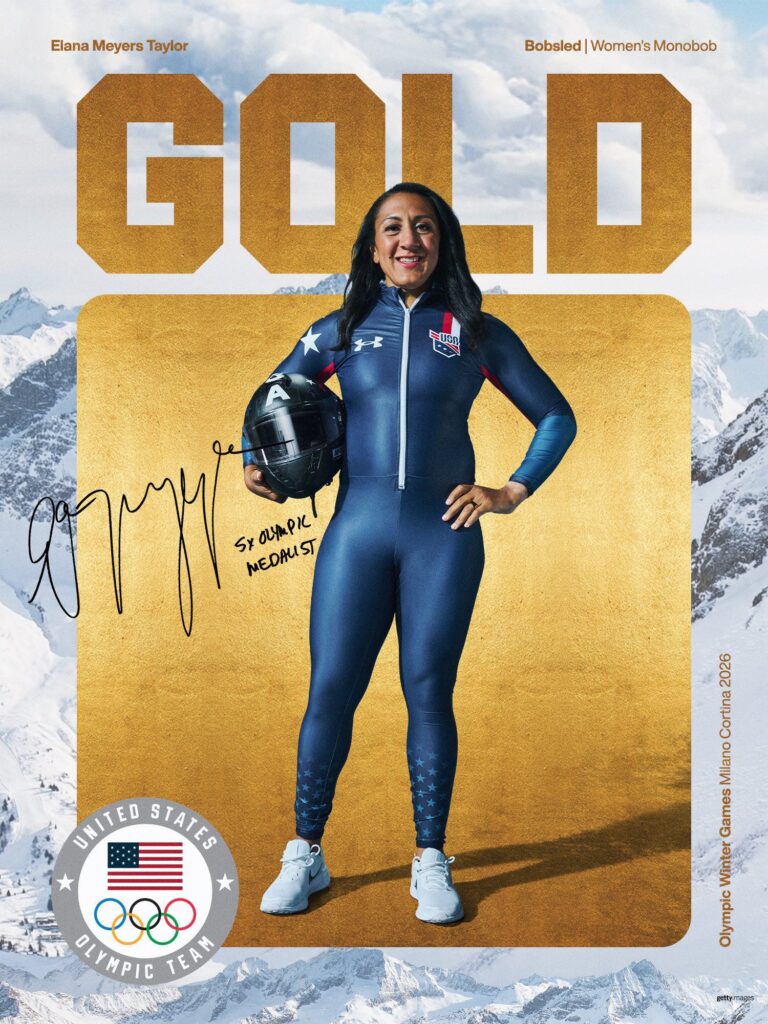
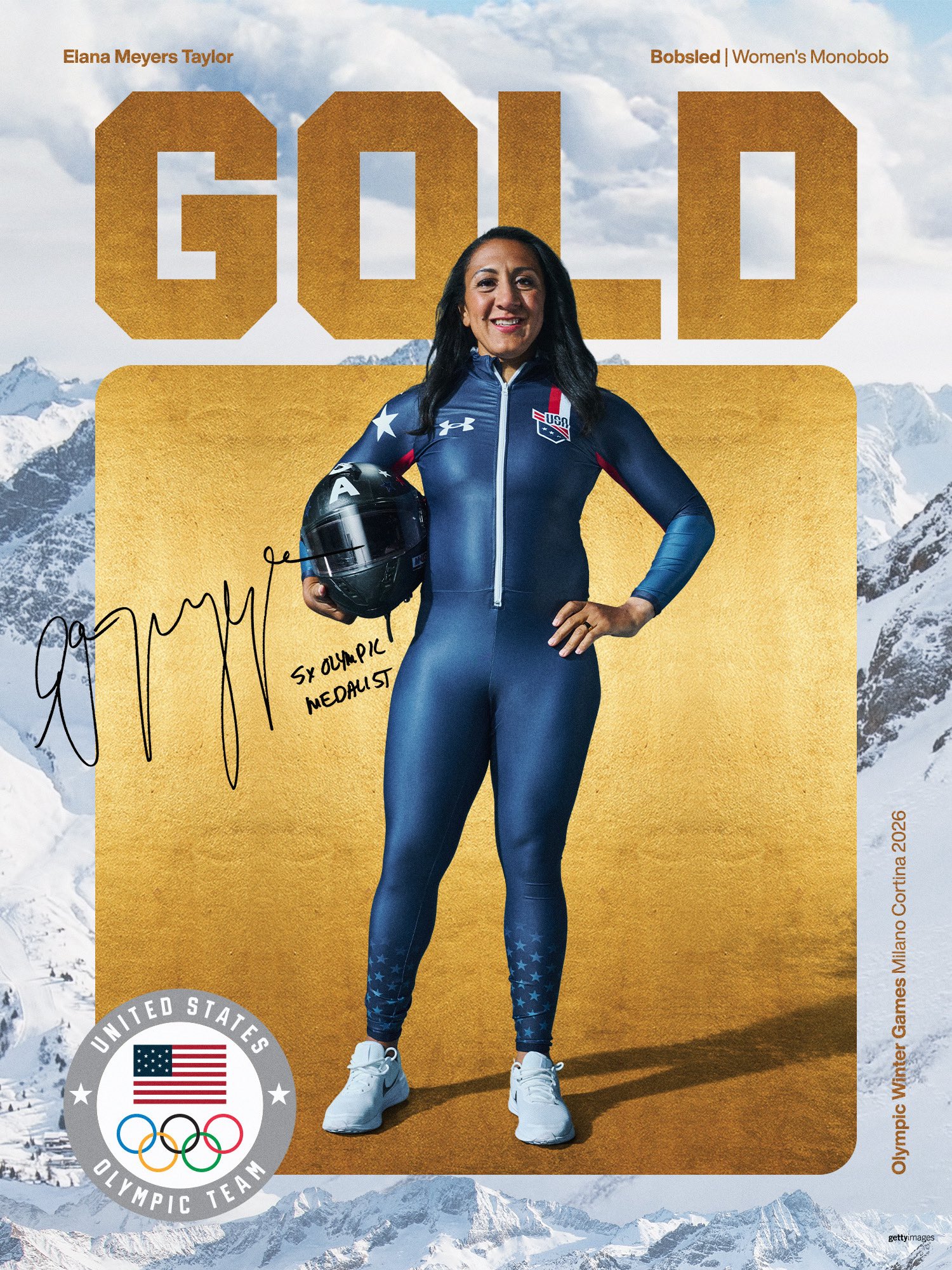
After years of perseverance and near-misses, American bobsled legend Elana Meyers Taylor has finally reached the top of the Olympic podium. At her fifth Winter Olympics, Meyers Taylor captured her first-ever Olympic gold medal, completing one of the most inspiring journeys in modern winter sports history.
A Long Road to Gold
Meyers Taylor entered the 2026 Winter Olympics already one of the most decorated athletes in U.S. winter sports, with multiple silver and bronze medals across previous Games. Yet one achievement had always eluded her: gold.
That changed this week, as she delivered a near-perfect performance in the bobsled competition, showcasing elite speed, precision driving, and years of technical mastery. Her winning run placed her ahead of powerhouse teams from Germany and Canada, finally earning her the title of Olympic champion.
Crossing the finish line, Meyers Taylor was visibly emotional, embracing teammates and celebrating a moment that had taken nearly two decades of elite competition to achieve.
“This gold means everything,” she said. “It’s proof that persistence pays off. I’ve waited a long time for this.”
A Historic Career
With five Olympic appearances, Meyers Taylor now stands among the most accomplished bobsled athletes in history. Her medal collection spans multiple disciplines, including monobob and two-woman bobsled, making her one of the most versatile competitors ever in the sport.
She is already the most decorated Black athlete in Winter Olympics history, and this gold further cements her legacy as one of Team USA’s greatest winter Olympians of all time.
Breaking Barriers
Beyond medals, Meyers Taylor’s impact goes far beyond the track. Throughout her career, she has been a powerful advocate for:
• Diversity and representation in winter sports
• Mental health awareness for athletes
• Women’s equity in elite competition
Her success has inspired a new generation of athletes—especially young women of color—to see themselves in sports where representation has historically been limited.
The Meaning of This Gold
This victory isn’t just another medal—it’s the culmination of resilience, longevity, and belief. Competing at the highest level across five Olympic cycles requires extraordinary physical discipline and mental strength.
Sports analysts describe her gold as one of the most emotionally significant moments of the 2026 Winter Games, symbolizing that greatness isn’t always about winning early—but about never quitting.
At 40 years old and still competing at the highest level, she has redefined what longevity and excellence look like in elite sports—proving that the best victories are sometimes the ones that take the longest to earn.