
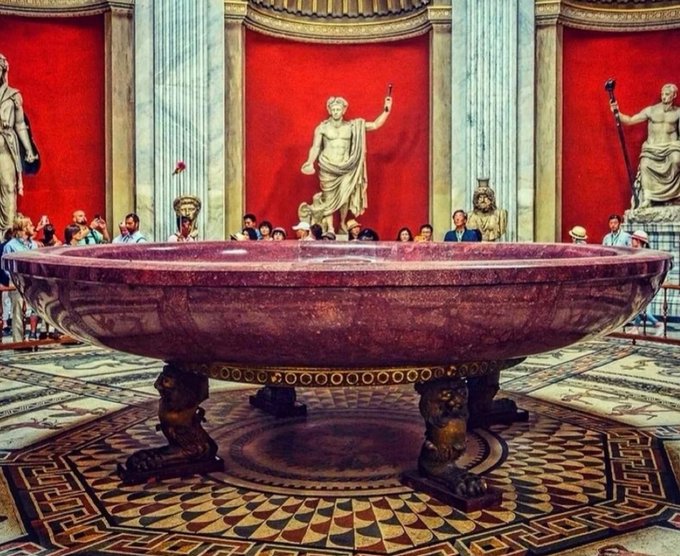
A massive stone bathtub attributed to Nero stands as one of the most extraordinary surviving luxuries of the Roman Empire. Carved entirely from purple porphyry, the basin reflects not just wealth — but absolute imperial authority.
Porphyry was among the most prized stones in the ancient world. Its deep purple color, speckled with crystalline inclusions, became synonymous with royalty. In fact, the color purple itself was strongly associated with imperial power in Rome.
A Stone Reserved for Emperors
The porphyry used for Nero’s bath was quarried from a single remote source in Roman Egypt, specifically in the Eastern Desert near the Red Sea. Transporting such massive stone blocks across desert terrain and then by sea to Rome required enormous labor, logistics, and state resources.
Because of its rarity and difficulty of extraction, porphyry was reserved almost exclusively for emperors. It was used in imperial sarcophagi, columns, statues, and ceremonial architecture. Owning a full bathtub carved from a single block was an unmistakable display of supreme status.
If one were to acquire that volume of genuine imperial porphyry today, experts estimate its value could approach $1 billion, given its rarity and the impossibility of reopening the ancient quarry at scale.
Nero and Luxury
Nero ruled from 54 to 68 AD and became infamous for extravagance and monumental construction projects, including the lavish Domus Aurea (Golden House) in Rome. His reign was marked by artistic ambition and opulent displays of power.
A porphyry bathtub fits the image of imperial indulgence associated with his rule. Roman baths were not merely hygienic spaces — they were architectural statements of status and refinement.
Enduring Legacy
Today, surviving porphyry artifacts are displayed in major European museums and churches, often repurposed through centuries of reuse after the fall of Rome. Their durability has preserved them remarkably well.
This 2,000-year-old basin stands as more than a bathing vessel — it is a physical reminder of the engineering prowess, wealth concentration, and symbolic power of the Roman Empire.
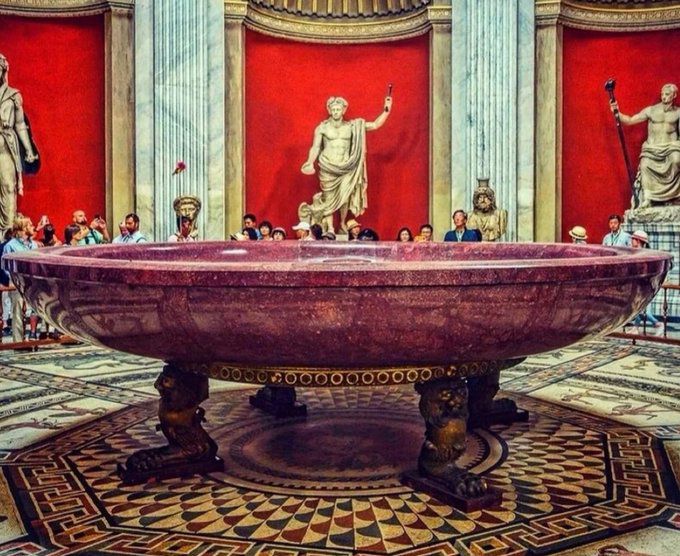
Emperor Nero’s 2,000-year-old porphyry basin symbolizes the unmatched luxury of ancient Rome.