
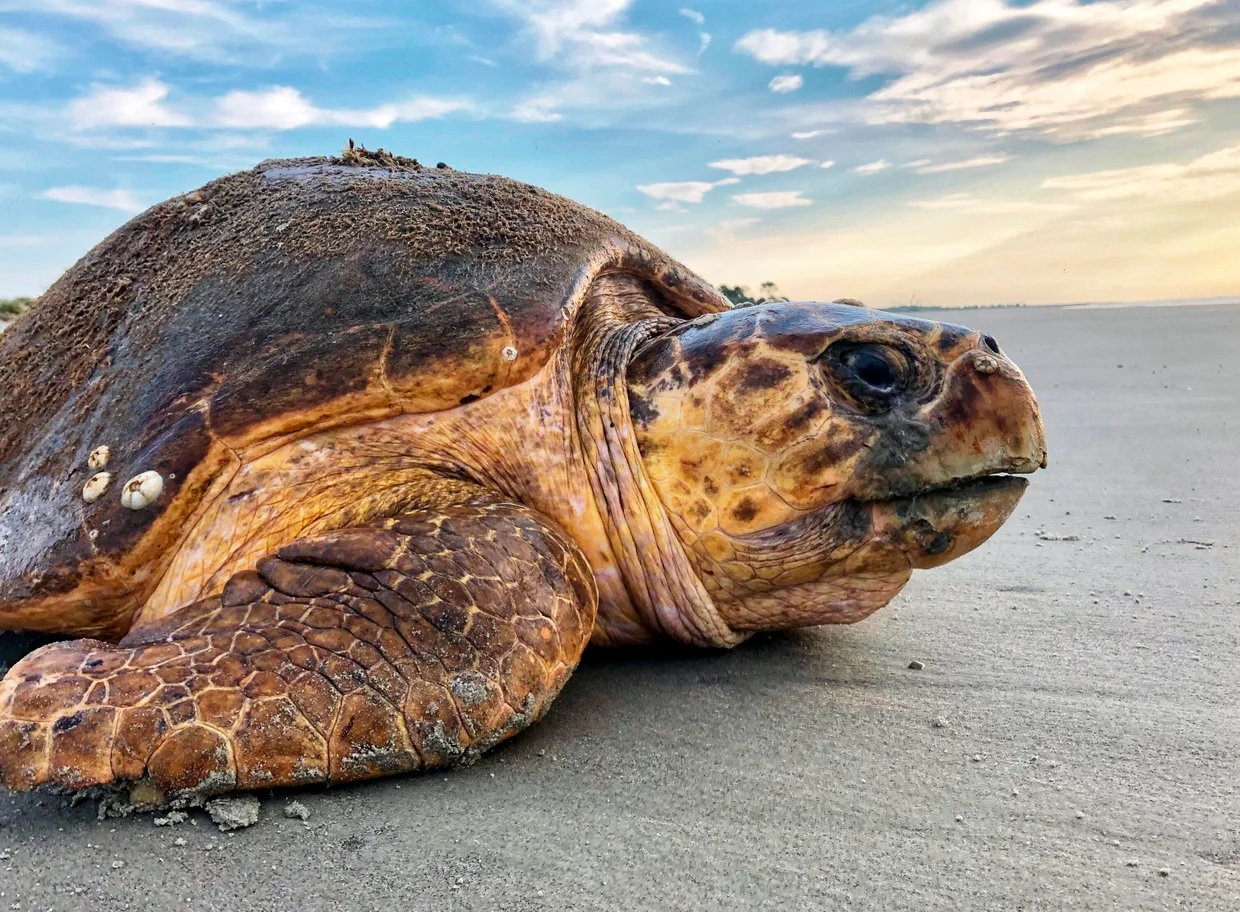
Georgia has recorded its highest number of loggerhead sea turtle nests on record, marking a major milestone for wildlife conservation along the state’s coastline. A total of 4,292 nests were documented during the 2026 nesting season, reflecting decades of efforts to protect the threatened marine species.
Tybee Island also celebrated a record-breaking season, documenting 59 sea turtle nests and surpassing its previous record of 35 set in 2022. The achievement highlights the importance of local monitoring programs and the continued work of conservation professionals and volunteers.
The statewide milestone represents a remarkable recovery from the early 2000s, when Georgia recorded only a few hundred nests annually. In 2004, the number dropped to approximately 358, underscoring the challenges facing loggerhead populations before conservation efforts began producing stronger results.
Hundreds of volunteers and wildlife professionals help monitor Georgia’s beaches throughout nesting season, searching for turtle tracks, identifying nests and protecting eggs from predators and human disturbance. On Tybee Island, the marine science center’s team regularly patrols the shoreline to document nesting activity and help safeguard vulnerable eggs.
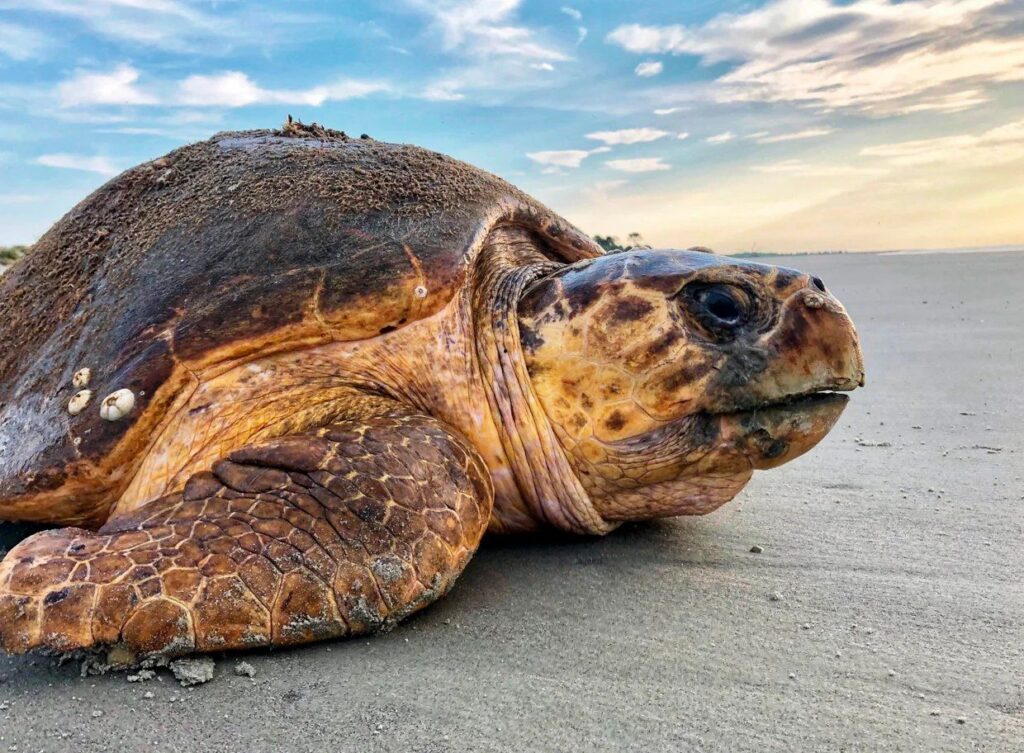
Long-term conservation measures have also played a significant role. These include turtle excluder devices in shrimp fishing nets, which allow sea turtles to escape rather than become trapped, alongside decades of beach monitoring and nest protection. The gradual rise in nest numbers reflects the cumulative impact of these efforts.
Despite the encouraging numbers, conservation work remains important. Beach erosion can threaten nests, while coastal development and changes in sand conditions may affect suitable nesting areas. On Tybee Island, some nests had to be moved to safer locations when erosion and high-tide lines put eggs at risk.
Loggerhead sea turtles take roughly 25 to 30 years to reach nesting maturity, meaning many of the turtles laying eggs today benefited from protections established decades ago. Their return to Georgia’s beaches demonstrates why sustained conservation programs are essential for wildlife populations with long life cycles.
The record season offers a hopeful sign for Georgia’s coastal ecosystem and the people dedicated to preserving it. While nest counts alone do not tell the entire story of population health, the new records represent a significant conservation achievement and a reminder that consistent protection can make a lasting difference.