
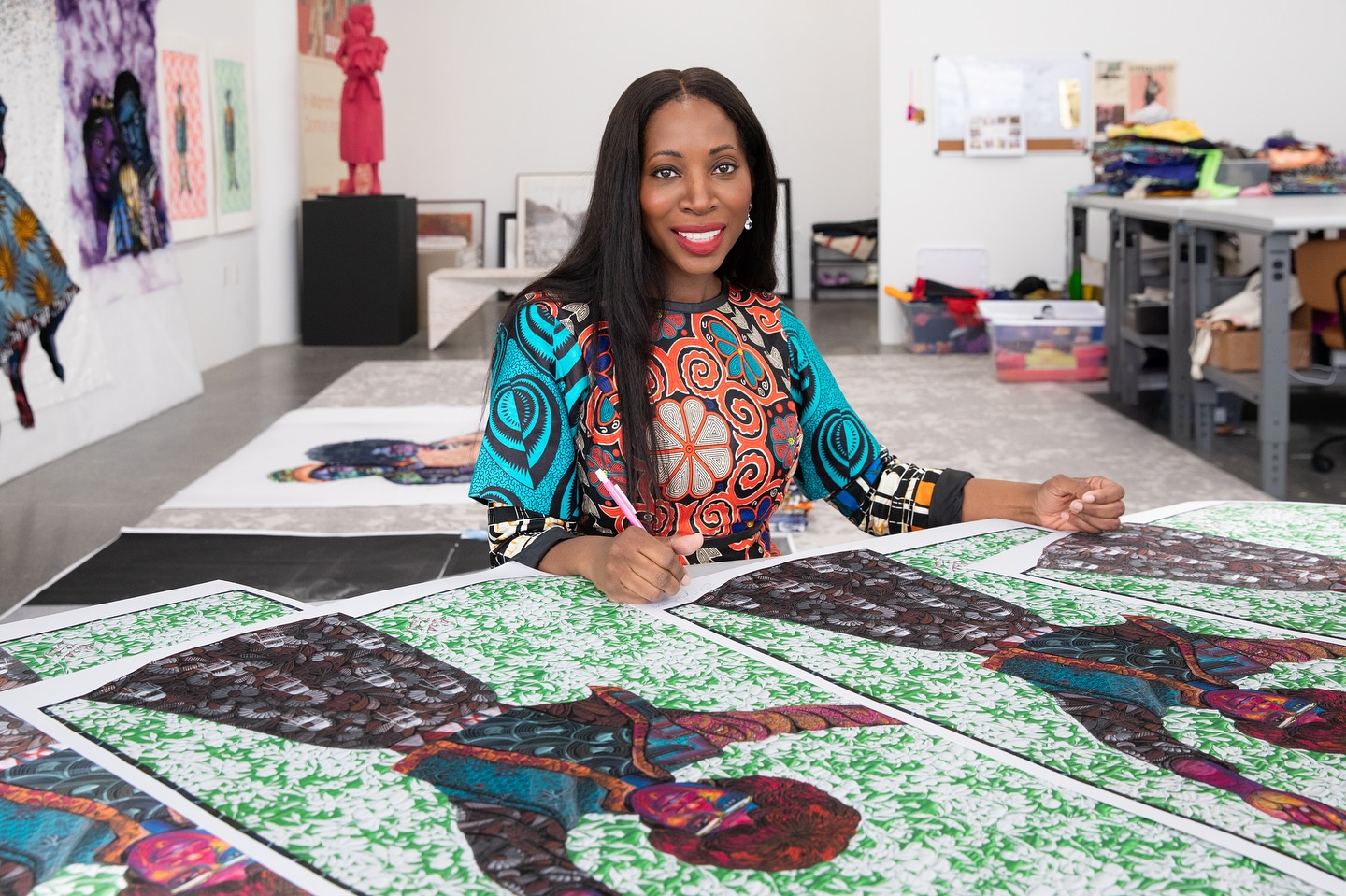
There are artists who paint history, and then there are artists who stitch it into permanence. Bisa Butler belongs to the latter.
For those unfamiliar with her work, Butler is a New Jersey–based fiber artist whose large-scale quilted portraits reframe the visual narrative of African American life. Her subjects are not celebrities manufactured for spectacle. They are everyday people, archival figures, churchgoers, schoolchildren, riders at leisure, families poised in dignity. Through fabric, she restores scale and significance to lives too often minimized in traditional art history.
Her recent feature on PBS’s EAST (premiered December 19, 2025) brought renewed national attention to a body of work that has already transformed contemporary textile art. But Butler’s importance is not simply aesthetic. It is cultural intervention.
Reclaiming the Medium
Quilting has long been categorized as “craft,” a domestic practice historically associated with women and often excluded from the hierarchy of “fine art.” Butler dismantles that hierarchy. She elevates quilting to museum scale, forcing viewers to confront its technical complexity and conceptual weight.
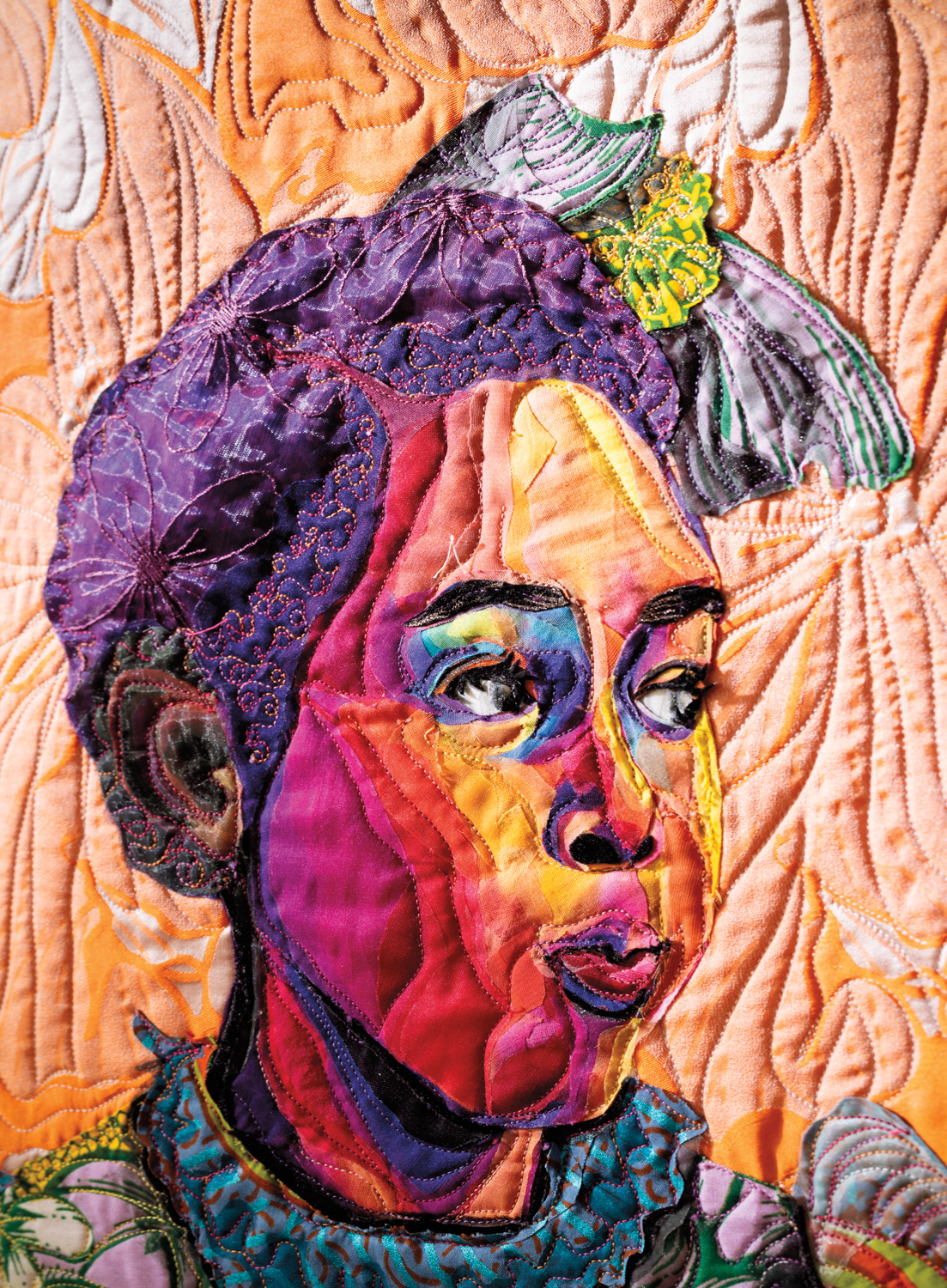
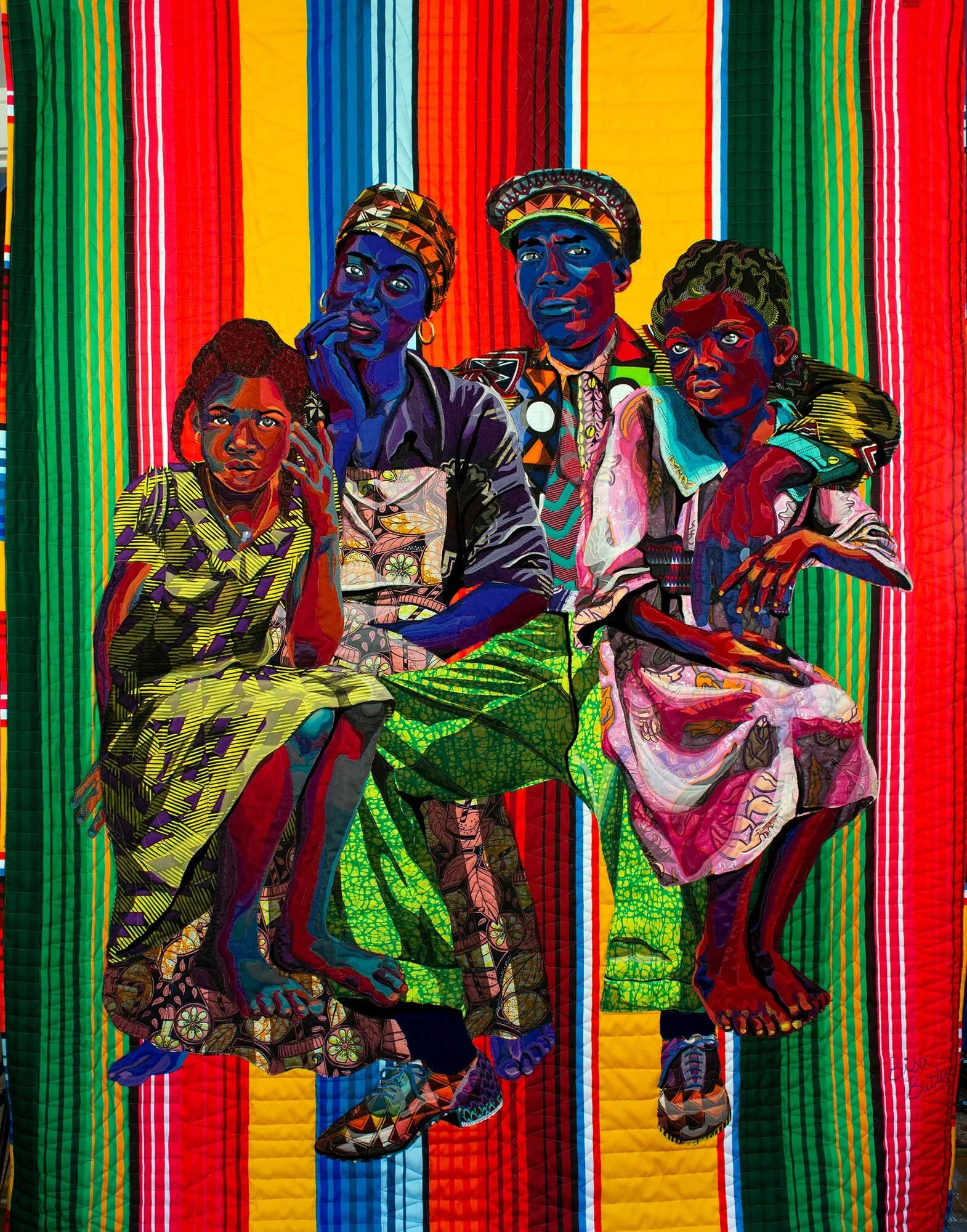
Each portrait is constructed entirely from layered, meticulously selected fabrics. She does not paint faces; she composes them from patterned textiles—African wax prints, velvets, florals, metallics—each chosen intentionally. Skin is not rendered in flat tones. It shimmers in cobalt, emerald, fuchsia, and gold. The effect is both hyperreal and transcendent.
From a distance, her work reads as a photograph. Up close, it becomes architecture: thousands of stitches, each one anchoring color, history, and movement.
The Archive as Resurrection
Much of Butler’s work begins with historical photographs. She studies images of African American communities from the early to mid-20th century—moments rarely centered in mainstream art institutions—and reconstructs them as monumental quilted portraits.
This act is not nostalgic. It is corrective.
By enlarging these figures to heroic scale, Butler grants them the gravitas traditionally reserved for political leaders and aristocracy in classical portraiture. A child in Sunday clothes stands as regally as a king. A group of young riders becomes an epic tableau. Ordinary life is rendered extraordinary not through embellishment, but through reverence.
Her portraits do not depict trauma as spectacle. Instead, they center joy, poise, individuality, and style. In doing so, Butler expands the visual vocabulary of Black representation.
Color as Language
Butler’s palette is deliberate and psychological. Blue may signal spiritual depth. Gold suggests legacy. Floral prints evoke tenderness or generational continuity. African textiles ground her work in diasporic lineage.
The fabrics are not decorative afterthoughts. They are narrative devices.
Because quilting inherently involves layering, her work becomes metaphor. Identity itself is layered—heritage, environment, memory, aspiration. Butler’s technique mirrors that reality. The surface may appear seamless, but underneath are countless decisions and intersections holding the image together.
Institutional Recognition
Her work has been exhibited at major institutions including the Art Institute of Chicago and the Smithsonian American Art Museum, signaling a broader shift in how textile art is valued within the canon of contemporary art.
Collectors and museums have embraced her work not as novelty, but as significant cultural documentation. She occupies a rare space: technically masterful, culturally resonant, and accessible without being simplistic.
More Than Portraiture
What distinguishes Butler is not only skill, but philosophy. She has spoken about wanting her subjects to feel “alive” again. There is a quiet activism embedded in that intention. To reanimate overlooked histories through fabric is to insist that they matter.
Her PBS EAST profile underscored this point: Butler does not merely sew images. She constructs visual monuments. And in doing so, she redefines what a monument can be—soft, intricate, colorful, but undeniably powerful.
For those encountering her for the first time, understand this: Bisa Butler is not simply making quilts. She is stitching a corrective to art history. She is building an archive of dignity. She is expanding the definition of portraiture.
And she is doing it one deliberate stitch at a time.