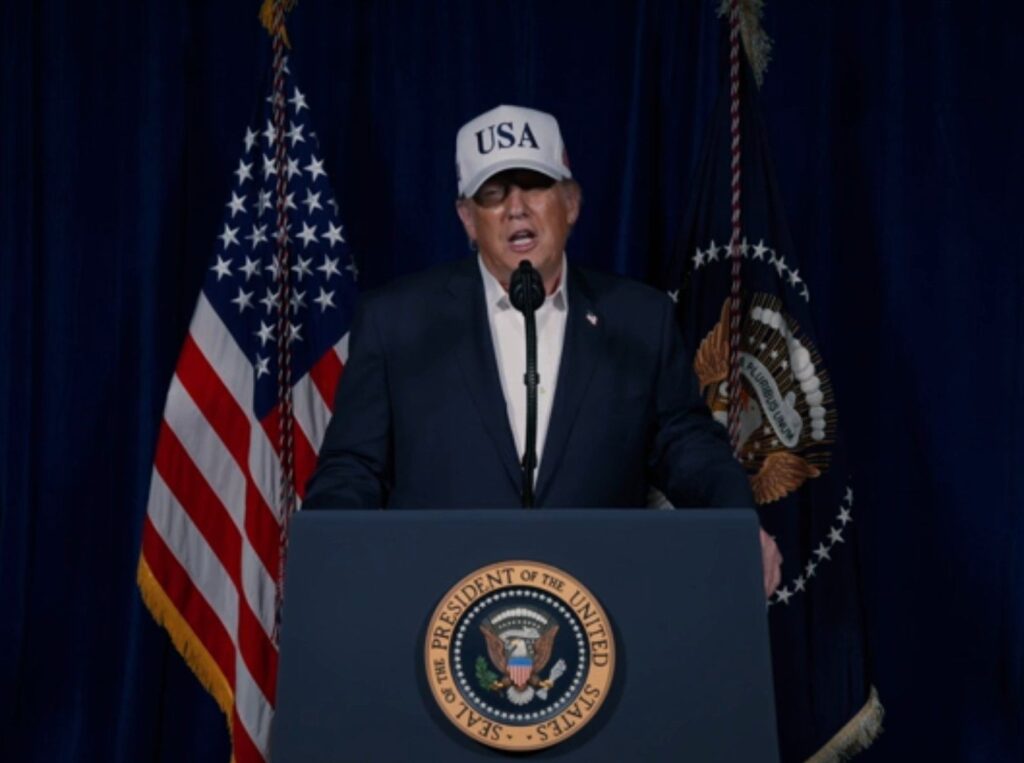
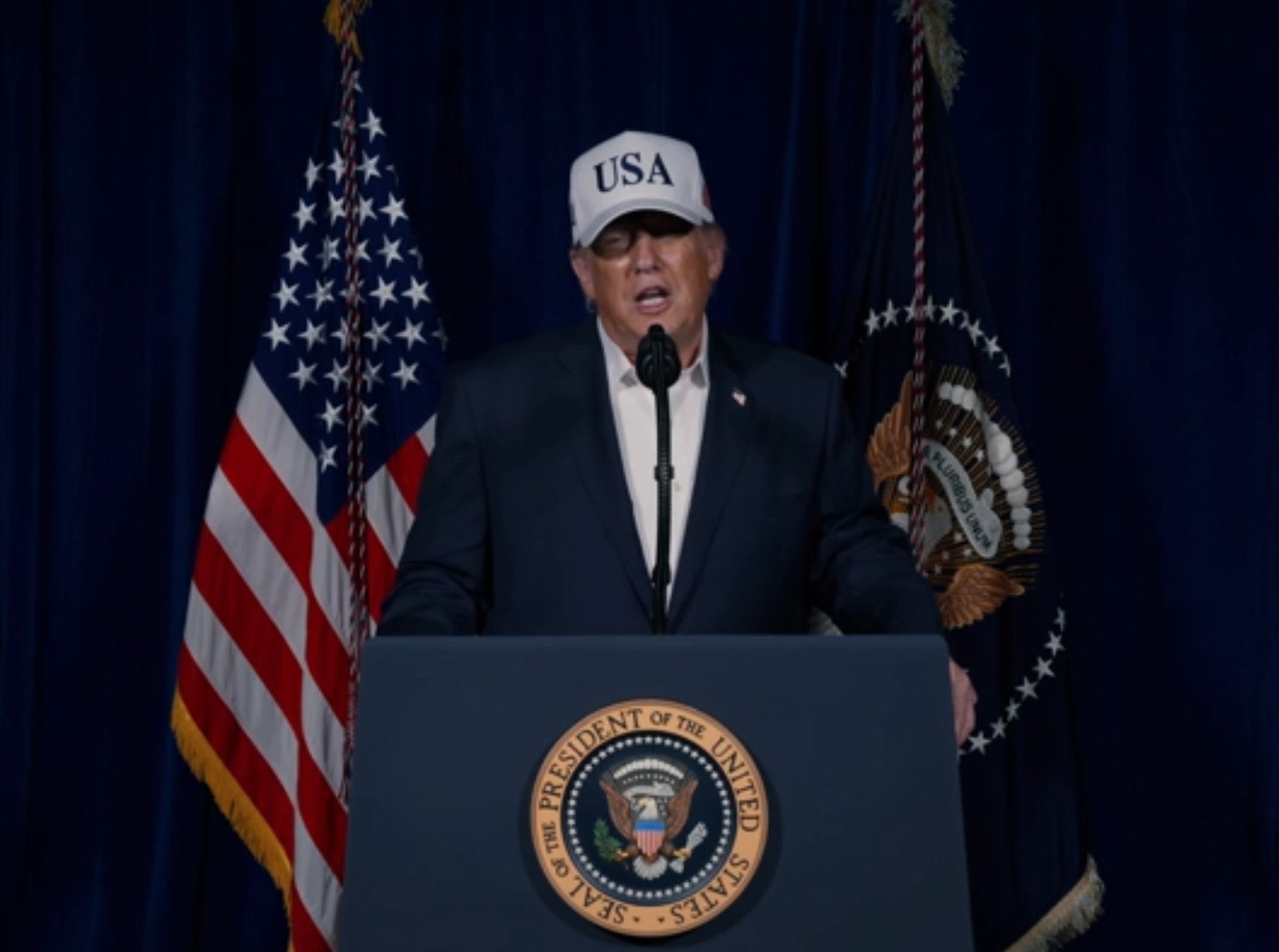
In a dramatic and highly consequential address delivered during active U.S. military operations, President Donald Trump spoke directly to the people of Iran, urging them to remain indoors during ongoing bombardment and later “take over” their government once U.S. operations conclude.
The statement represents one of the most explicit calls for internal political change directed at Iran’s population by an American president during an active conflict.
The Message to the Iranian People
Trump framed his remarks as an appeal to civilians rather than to Iran’s ruling leadership, describing what he called a “historic opportunity” for political transformation.
He warned residents to remain sheltered as military strikes continue:
“Stay sheltered, don’t leave your home. It’s very dangerous outside, bombs will be dropping everywhere.”
He then encouraged Iranians to seize control of their government once military actions are complete:
“When we are finished, take over your government. It will be yours to take. This will probably be your only chance for generations.”
Trump portrayed the intervention as fulfilling what he described as long-standing requests for American support from Iranian citizens dissatisfied with their government:
“For many years you have asked for America’s help, but you never got it. No President was willing to do what I am willing to do tonight.”
He concluded by emphasizing U.S. military backing:
“America is backing you with overwhelming strength and devastating force. Now is the time to seize control of your destiny.”
A Significant Escalation in Rhetoric
Direct appeals encouraging regime change during active hostilities are rare in modern U.S. diplomacy. While American administrations have historically criticized Iran’s leadership and imposed sanctions, public calls for citizens to overthrow their government during ongoing airstrikes represent a marked intensification of rhetoric.
Regional and Global Implications
The speech comes amid heightened fears of a broader regional conflict. Iran maintains strategic alliances and proxy networks across the Middle East, and any perceived attempt at forced political change could trigger:
• Missile or drone retaliation
• Cyber attacks
• Activation of regional militias
• Disruptions to global energy supply routes
Global leaders have urged restraint, warning that escalation between Washington and Tehran could destabilize the wider Middle East and impact global markets, particularly oil and shipping routes through the Strait of Hormuz.
A Defining Moment
Whether the speech marks a turning point in the conflict or a rhetorical escalation within a limited campaign remains to be seen. What is clear is that the address significantly raises the stakes, not only militarily but politically, as it openly frames the conflict as an opportunity for systemic change within Iran.
The situation remains fluid, and developments in the coming hours and days will determine whether tensions de-escalate or widen into a broader confrontation.