
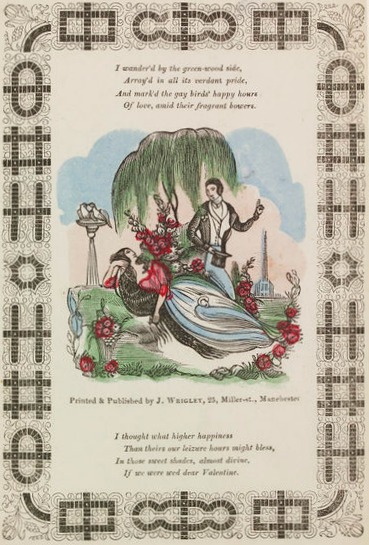
Valentine’s Day wasn’t always about candlelit dinners or boxed chocolates. Its roots reach back to antiquity a blend of early Christian martyrdom, Roman fertility festivals, and centuries of poetic reinvention. The name “Valentine” comes from several men martyred under Roman law who became associated with love and devotion in medieval lore. By the Middle Ages, poets in England and France had begun linking St. Valentine’s feast day with romantic pairing, giving rise to love letters and tokens exchanged in quiet courtship.
That old tradition was personal, handwritten, intentional. It wasn’t born from commerce. That shift from intimate gesture to consumer ritual — began in earnest during the Industrial Revolution, when printing technologies made cards affordable and accessible. By the early 20th century, greeting cards filled with hearts, cupids, and sentimental verse were being mass-produced, turning what had been private expression into public commodity. Chocolates and roses followed, sold as convenient shorthand for affection. Over decades, Valentine’s Day became less about spontaneous sentiment and more about prescribed ritual.
Today, its commercialization is everywhere you look: pink aisles in drugstores in January, prix-fixe menus advertised long before February 14, bouquets quoted almost as if they were stocks. And yet, something interesting is happening underneath all of that. People are pushing back — subtly, not in protest marches, but in how they choose to mark the day.
For many, Valentine’s Day around food and drink has become a matter of intention rather than obligation. Restaurants fill on the evening of the 14th, yes, but not necessarily because couples feel they must be seen at a red-tablecloth spot. It’s because shared meals are one of the few cultural rituals left that still work the best environments for real connection, conversation, and unhurried presence. High-end steakhouses and boutique wine bars have learned this. Their menus for the night lean into comfort and quality, not spectacle: handmade pastas, rich sauces, shared desserts, and cocktails designed to savor, not speed through.
There’s a reason couples linger longer now, choosing natural wine and conversation over splashy bottles and rushed courses. This is a generation that has seen social media preen its way through every holiday, and developed a mild aversion to rituals that demand performance. They want authenticity a night that feels like them rather than a day prescribed by marketing calendars.
Then there are the people who quietly opt out of institutional Valentine’s Day entirely. Reservations go unmade. Restaurants, even on February 14, will post photos of empty booths and intimate bar seats waiting for guests who aren’t coming. There’s a trend toward gatherings of friends rather than couples, wine nights instead of table charges, desserts shared on sofas rather than plated by servers in tuxes. Not anti-romance just a broader definition of it.
And it’s not just couples rewriting the script. Singles and groups use the day to celebrate self-care, chosen family, platonic love, even community. Bars advertise “Galentine’s” or “Queentine’s” events, not in opposition to tradition, but as an expansion of what love — and celebration — can mean. Restaurants find midday bookings as meaningful as dinner. Brunches have become a Valentine’s staple, a quiet rejection of being told that romance only happens under dimmed lights at 7 p.m.
What’s fascinating is that this trend isn’t uniform. In some parts of the country, traditional Valentine’s Day rituals are thriving — packed restaurants, sold-out wine lists, artisanal chocolate shops in high demand. In other places, the day feels like any other mid-February Saturday. That contrast reveals something about how we negotiate tradition, commerce, and personal meaning in a culture that has largely outsourced emotion to marketplaces.
At its core, Valentine’s Day still asks us the same question it did centuries ago: how do we show love? The trappings have certainly changed. Retail calendars have co-opted the date, and businesses have woven it into their bottom lines. But the choices people make around food and drink on this day whether it’s a long dinner at a favorite restaurant, a bottle of wine shared at home, or no dinner at all are where the real story lives.
Food and drink remain the language many choose to speak. They’re reminders that intimacy isn’t about the most expensive bottle of champagne, or the most elaborate menu, or the most elaborate Instagram post. It’s about the moments that linger — the shared plates, the stories swapped over glasses of wine, the quiet satisfaction of a dessert rich enough to warrant conversation.
Valentine’s Day, in its commercial form, may have begun with mass-produced cards and marketing calendars. But what people are making of it now the way they gather around tables, redefine celebration, or choose selective absence says something far more human. It tells us that rituals evolve, that love isn’t one script but many, and that the best moments often happen not because it’s Valentine’s Day, but in spite of everything the holiday has become.