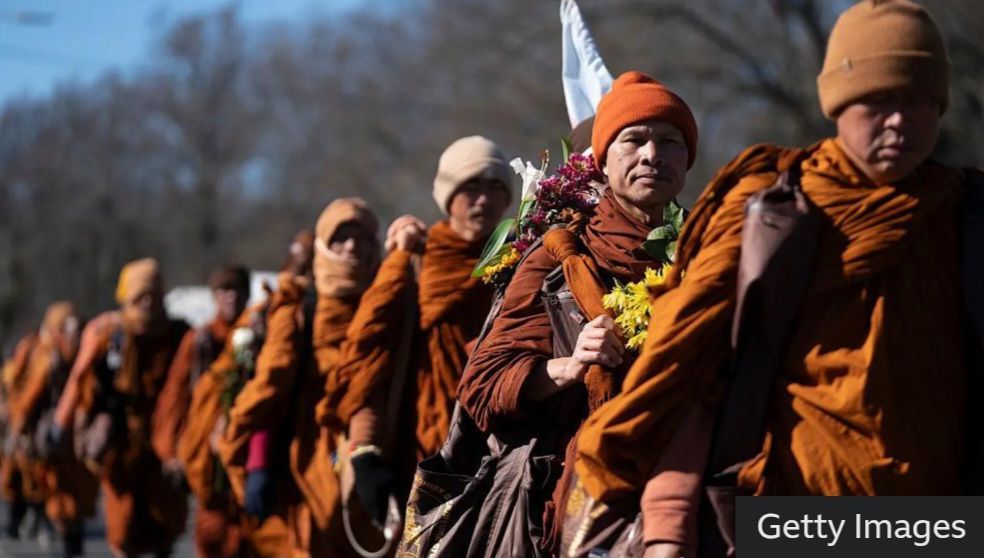
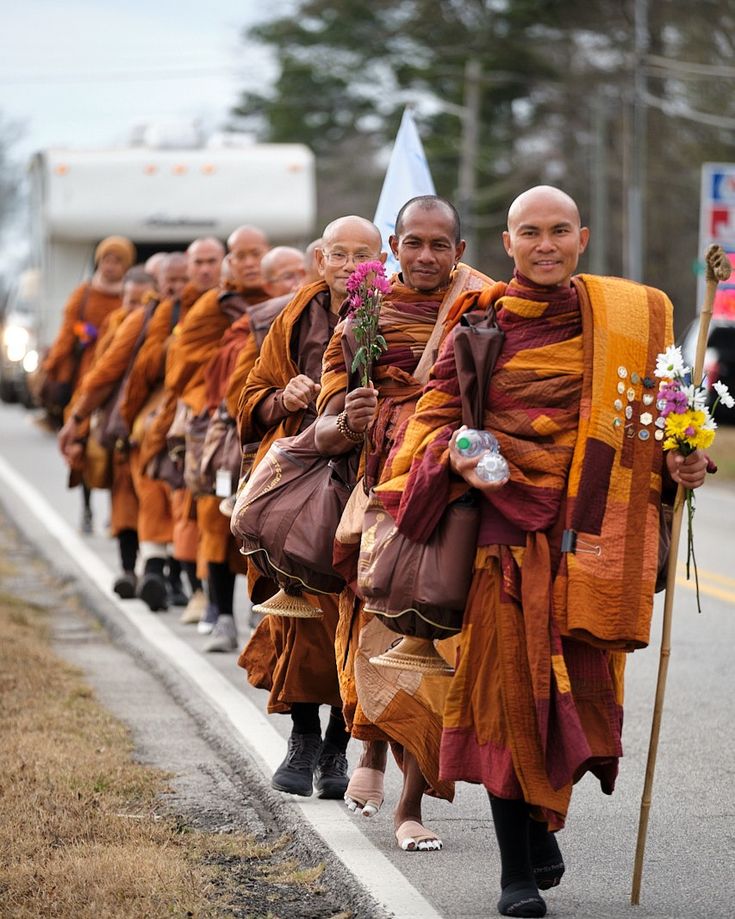
After more than three months on the road, a group of Buddhist monks has completed their remarkable 108-day “Walk for Peace,” arriving in Washington, D.C. with a powerful message of compassion, unity, and nonviolence. The spiritual journey, which began on the West Coast, covered thousands of miles and brought the monks through cities, towns, and rural communities across the United States.
The walk was not a protest, but a pilgrimage rooted in Buddhist teachings. Along the way, the monks paused in local communities to meditate, offer prayers, and engage in peaceful dialogue with residents, encouraging mindfulness and reflection in an increasingly divided world. Their presence attracted people from diverse backgrounds, many of whom joined sections of the walk or attended public gatherings to learn about the monks’ mission.
In Buddhism, the number 108 holds deep spiritual significance, symbolizing the earthly desires and human struggles that one must overcome to achieve enlightenment. By committing to a 108-day journey, the monks aimed to remind people of the importance of inner peace as the foundation for global harmony.
The monks’ arrival in the nation’s capital marked a symbolic ending to their journey. Rather than making political demands, they offered prayers for peace, healing, and understanding, calling attention to the need for compassion in a world facing war, social unrest, and environmental challenges.
For many who followed their journey, the Walk for Peace served as a quiet yet powerful reminder that meaningful change often begins with small, mindful steps. In a time when global tensions dominate headlines, the monks’ simple act of walking became a profound statement about humanity’s shared responsibility to choose peace over conflict.