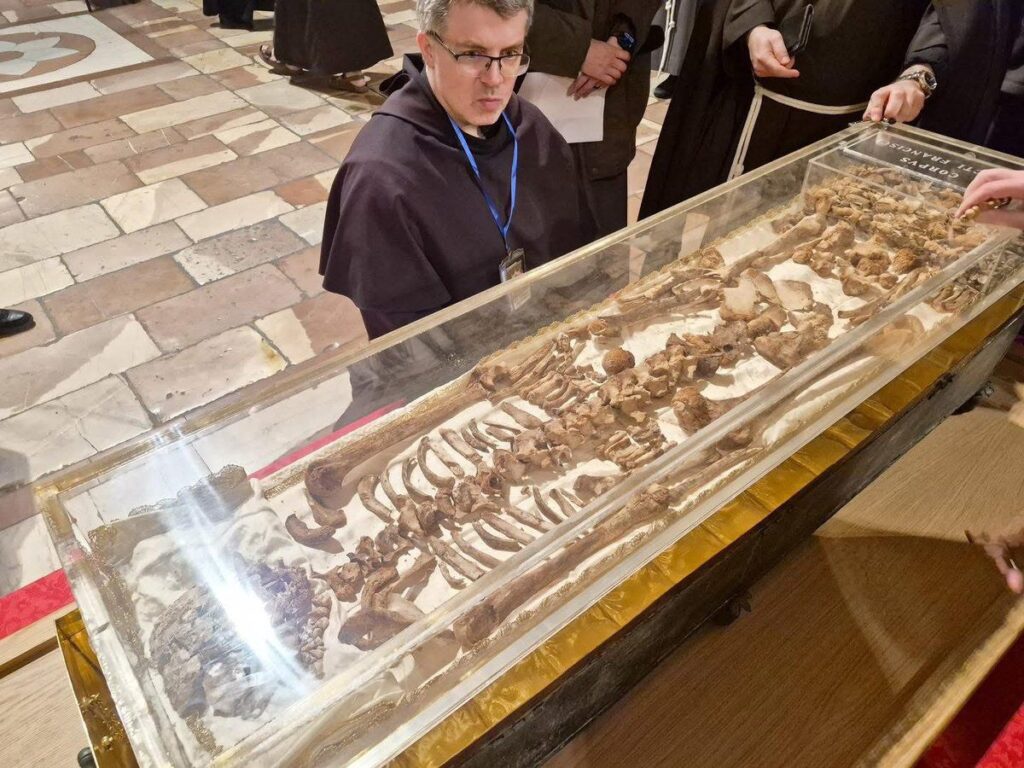
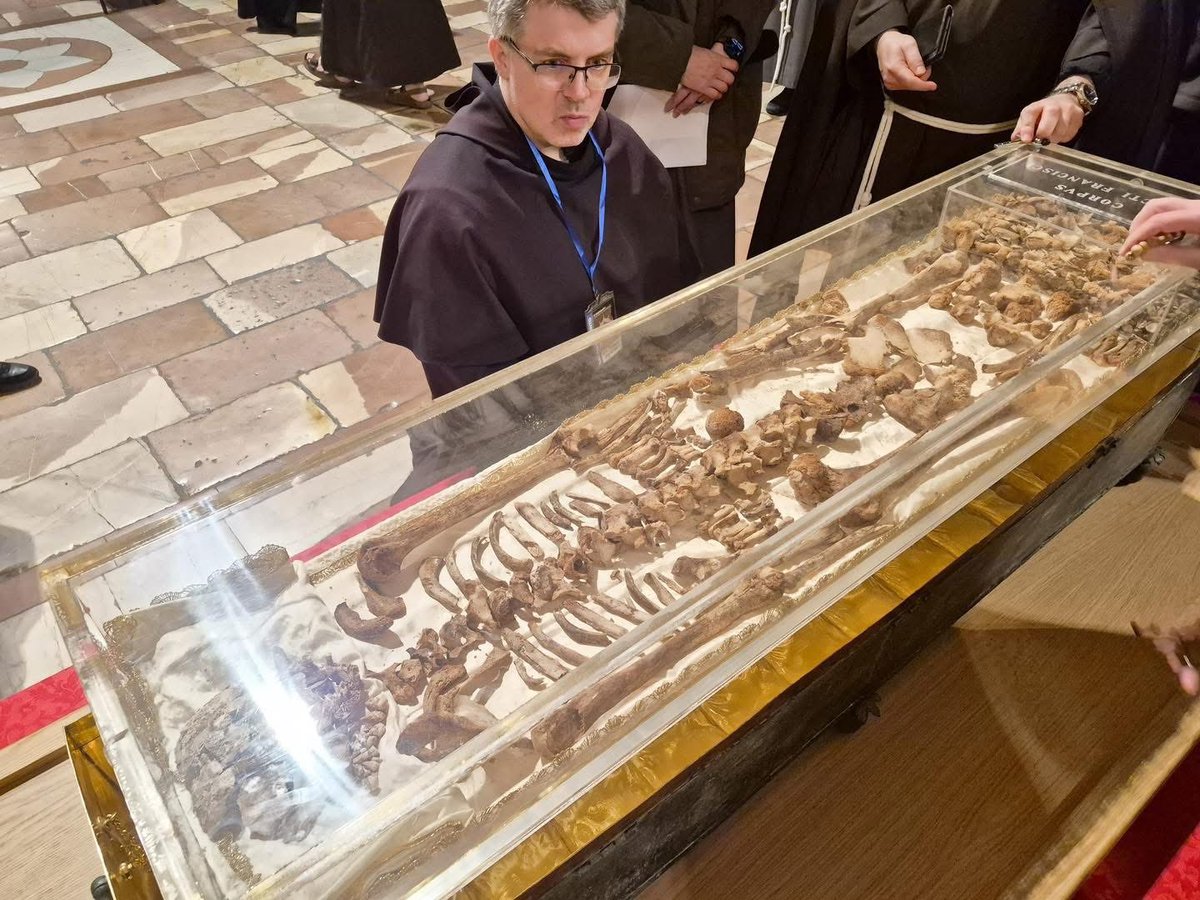
In a rare and deeply symbolic moment for the Catholic Church, the mortal remains of Francis of Assisi have been opened for public veneration in Italy, nearly 800 years after his death in 1226.
The event is taking place at the Basilica of Saint Francis of Assisi, located in the medieval hill town of Assisi. The basilica, a UNESCO-recognized landmark, has long served as one of Christianity’s most important pilgrimage sites, housing the saint’s tomb in its crypt.
A Moment of Profound Spiritual Significance
The public exposition of a saint’s remains is an uncommon event in Catholic tradition, typically reserved for major anniversaries or jubilee celebrations. Church authorities describe the occasion as both commemorative and pastoral — an opportunity for the faithful to reflect on the enduring legacy of a man whose life transformed Christian spirituality.
Pilgrims from across Europe, Latin America, and Asia are expected to travel to Assisi for the viewing, many seeing it as a once-in-a-lifetime spiritual encounter.
Security and preservation measures have been carefully implemented to protect the integrity of the sacred remains while accommodating large numbers of visitors.
Who Was St. Francis of Assisi?
Born Giovanni di Pietro di Bernardone in the late 12th century, Francis renounced his family’s wealth after a profound spiritual awakening. He chose a life of radical poverty, service to the poor, and devotion to peace.
He founded the Franciscan Order, which emphasized humility, simplicity, and missionary outreach. His teachings challenged the material excess of his era and introduced a renewed focus on compassion and equality within Christian practice.
Francis is widely regarded as the patron saint of animals and ecology, due to his belief in harmony between humanity and creation. His “Canticle of the Sun,” a poetic hymn praising nature, remains one of the earliest works of Italian literature.
The Basilica: A Monument to Faith and Art
The Basilica of Saint Francis, constructed shortly after his canonization in 1228, stands as a masterpiece of medieval architecture. Its frescoes — created by artists including Giotto and Cimabue — depict scenes from the saint’s life and are considered foundational works of early Renaissance art.
The basilica’s lower church houses the crypt where St. Francis’ remains were rediscovered in 1818 after centuries of concealment for protection. Since then, the tomb has been a focal point for prayer and pilgrimage.
A Pilgrimage for a New Generation
For many pilgrims, the public opening of his remains is not merely historical but deeply personal. Visitors are expected to spend time in prayer, reflection, and spiritual renewal.
Clergy leaders emphasize that the event is not about spectacle, but about rediscovering the saint’s call to simplicity, compassion, and reconciliation in a modern world often marked by division.
A Rare Chapter in Church History
Moments like this are rare in Catholic history — when centuries-old sacred remains are made visible to the faithful. It underscores the enduring connection between tradition and contemporary devotion.
Nearly 800 years after his passing, St. Francis of Assisi remains not only a historical figure but a living spiritual influence whose message continues to cross borders and generations.