On September 22, at the White House Initiative on HBCUs Summit in Washington, Education Secretary Linda McMahon announced that the administration was sending historically Black colleges and universities another $174 million, money Congress had not appropriated for them. Three weeks later, on October 14, fifty-six members of Congress wrote back. Their letter to McMahon does not dispute that HBCUs need the money. It disputes her right to move it.
The administration and its critics both claim to be defending underfunded colleges and the students who attend them. The fight is over the source of the money and over who, under the Constitution, gets to decide where federal education dollars go.
The Money, and What Came With It
The $174 million is for fiscal 2026 and sits on top of the $406 million Congress approved and the president signed for HBCUs this year. By the Education Department’s own accounting, the administration has now directed more than $612 million to HBCUs above congressionally approved levels across fiscal 2025 and 2026. Tribally controlled colleges and universities received a separate one-time award of more than $61 million in the same announcement.
Add the two September figures together and you get $235 million, which is the number in the headline of the Tri-Caucus statement discussed below. One pot, described two ways.
McMahon called HBCUs “engines of opportunity in communities” and said the funding would prepare students “for success in a rapidly evolving economy.” The HBCU world’s largest advocates accepted the money without hesitation about its size. “The needs on HBCU campuses are too severe; but this investment will surely yield a great return,” said Dr. Michael L. Lomax, president and CEO of UNCF. Dr. Harry L. Williams of the Thurgood Marshall College Fund credited the result to advocates who committed “to work in a bipartisan manner.”
UNCF’s case for the money is economic as much as educational: the organization estimates that HBCUs generate about $16 billion in economic activity a year and that one graduating class will earn $146 billion over its lifetimes. The administration distributed the new money through Title III, reprogramming mandatory education funds rather than asking Congress for a new appropriation.
Money Taken From a Neighboring Line
The reprogramming is the issue. The funds came from grant programs for minority-serving institutions: Hispanic-serving institutions, Asian American and Native American Pacific Islander-serving institutions, Alaska Native and Native Hawaiian-serving institutions, Native American-serving nontribal institutions, and predominantly Black institutions. Eligibility for most of those programs turns on enrollment: a college qualifies when a set share of its students comes from a particular racial or ethnic group.
The administration’s position is that this design is unconstitutional. Last September the Education Department canceled $350 million in discretionary grants for minority-serving institutions and labeled the programs discriminatory. The Justice Department later issued a legal memo agreeing. HBCUs and tribal colleges were spared because their federal designations rest on history and mission, not on the racial makeup of the current student body. The administration’s fiscal 2027 budget proposal would cut $354 million more from MSI grant programs, within $4 million of last year’s cancellation. A one-time redirection is being written into budget policy.
The critics’ strongest argument is procedural, and they make it in constitutional terms. “No court has found these programs that Congress has funded to be unconstitutional, and the administration’s mere belief that they are does not give it the necessary authority to spend those funds for any other purpose or program,” the lawmakers wrote. “The law is clear,” the letter states. “Congress mandated that funds, with specific statutorily prescribed amounts, be provided for each grant program with specific statutorily defined purposes in each fiscal year.”
Fifty-Six Signatures and Three Caucuses
The letter was led by Sen. Mazie Hirono of Hawaiʻi, whose state is home to Native Hawaiian-serving institutions, one of the categories that lost funding. The signers state plainly that they support additional funding for HBCUs and tribal colleges, just not funding taken from other institutions.
The same argument arrived in blunter language from the Tri-Caucus: Rep. Grace Meng of the Congressional Asian Pacific American Caucus, Rep. Yvette Clarke of the Congressional Black Caucus, and Rep. Adriano Espaillat of the Congressional Hispanic Caucus. That the Black Caucus chair signed it matters; these are not opponents of HBCU funding. “HBCUs and TCUs are vital institutions that deserve robust federal investment,” the three chairs wrote. “Rather than increasing funding for these schools, the Trump administration has decided to redirect grants intended for other institutions that support historically underserved students. We saw this same playbook last year; it is a cynical ploy to pit minority communities against each other and we won’t stand for it.”
The Georgia Counterpoint
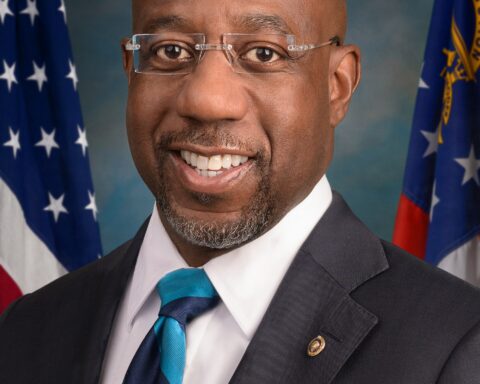
Georgia shows the other route to the same destination. On October 5, Sen. Raphael Warnock announced $97.1 million in Defense Department research awards for ten HBCUs and minority-serving institutions, including $9.78 million for Clark Atlanta University. That money came through the appropriations process, congressionally directed and signed into law, which is why nobody is suing over it. Nearly every figure in this fight agrees HBCUs have been underfunded for generations. They disagree about whether an administration may correct that on its own authority, using money Congress assigned to someone else.
The $174 million is already moving. What the letter decides is leverage, not this year’s checks: Congress is writing the fiscal 2027 budget now, and fifty-six of its members have put their objection in writing, addressed to the secretary who moved the money.
The Social Register’s event directory tracks the season’s galas, benefits, and society evenings. Plan your next evening there.