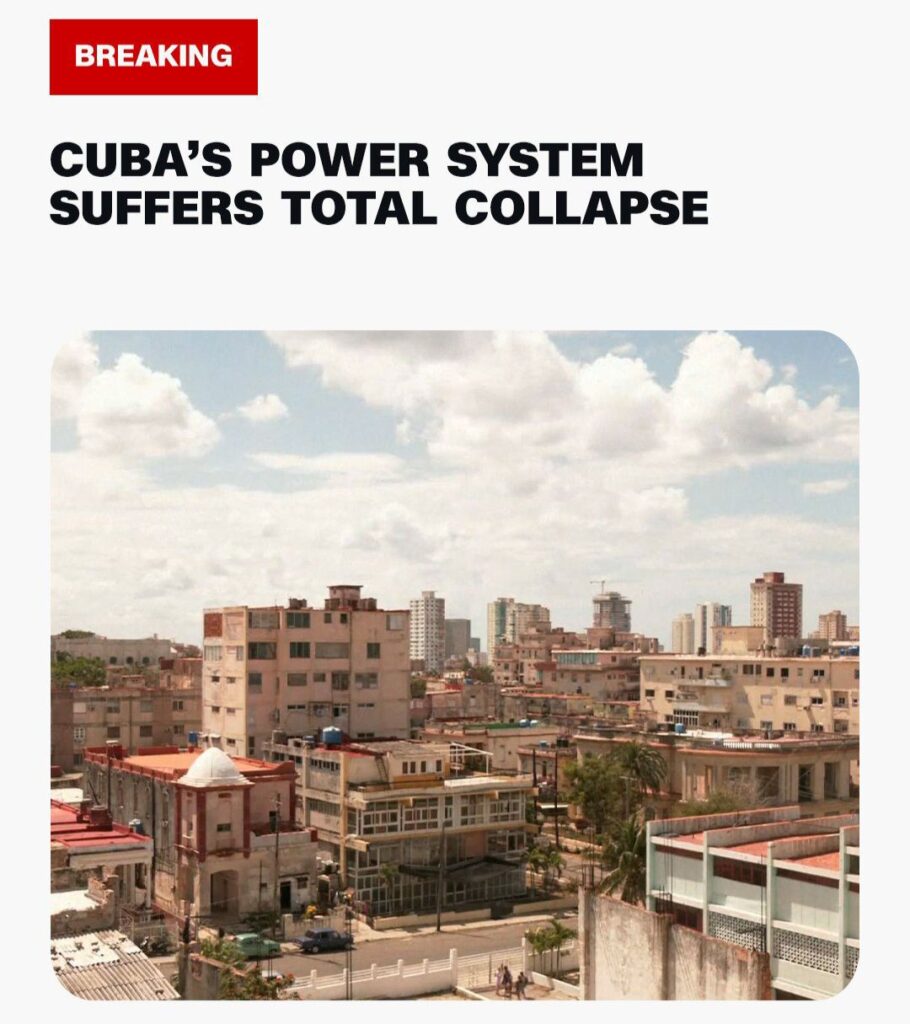
Cuba is facing a total electrical grid failure, triggering the island’s first nationwide blackout in years and plunging millions into darkness amid an already strained energy system.
The collapse comes as fuel shortages—linked in part to disruptions in oil supply following tightened U.S. restrictions—have placed severe pressure on the country’s aging power infrastructure.
Widespread Impact Across the Island
Reports indicate that the outage has affected major cities including Havana, as well as rural provinces, leaving homes, hospitals, and businesses without electricity. Residents have been forced to rely on generators, candles, and limited backup systems as authorities scramble to restore power.
Public transportation, communications, and essential services have also been disrupted, raising concerns about healthcare access, food storage, and water supply systems.
Causes Behind the Collapse
Cuba’s power grid has long been vulnerable due to:
• Aging infrastructure and limited modernization
• Dependence on imported fuel, particularly oil
• Ongoing economic constraints and sanctions impacting maintenance and supply chains
Energy experts say the recent supply shock created a domino effect, leading to system-wide failure rather than localized outages.
Government Response
Officials in Cuba have acknowledged the severity of the blackout and say emergency measures are underway to gradually restore electricity. Priority is being given to critical facilities such as hospitals and water systems.
Authorities are also urging residents to conserve energy once service begins returning and to remain cautious during restoration efforts.
Regional and Global Implications
The blackout underscores the fragility of Cuba’s energy system and highlights the broader geopolitical impact of fuel supply disruptions. Analysts warn that without long-term investment and diversified energy sources, similar incidents could occur in the future.
For now, millions across Cuba are waiting for power to return, as the nation works to recover from one of its most significant infrastructure failures in recent years.